

Plastic is a problem. Widely recognized as a pervasive and escalating global challenge, experts agree that without drastic intervention, our plastic problem is projected to worsen considerably.
Commendably, the hospitality and restaurant industry continue to take actionable steps towards overall sustainability: investing in energy efficient products, lessening our carbon footprint, adding low-flow fixtures to restrooms, reducing food waste, responsible sourcing, and finding sustainable replacements for single-use plastic.
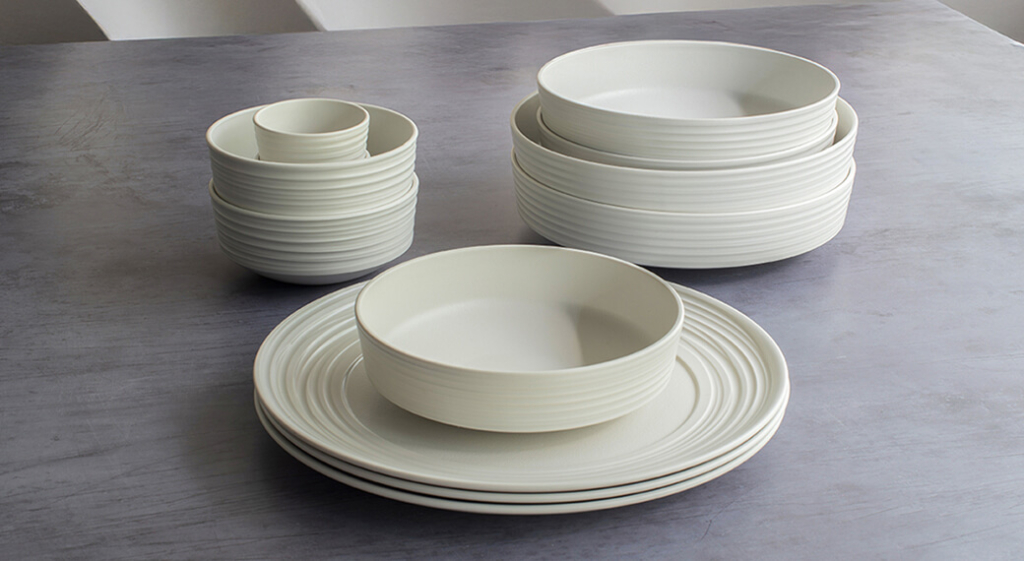
Now, we have a chance to make an even bigger impact with a new line of commercial dinnerware made from recycled plastic bottles. Introducing re.WARE™ from Front of the House® (FOH®).
Our Oceans Are Drowning in Plastic
Every year, 12 tons of plastic ends up in our oceans which has a devastating effect on marine ecosystems. Thinking specifically about plastic bottles, the ecological consequences are vast:
- Macroplastics: Intact or pieces of water bottles end up in marine life, causing internal and external injuries, digestive blockage, and death.
- Microplastics: Ultraviolet radiation and wave action cause plastic bottles to fragment into micro (<5mm) and nanoplastic (<100nm) particles. These particles are ingested by marine life and bioaccumulate throughout the food chain, including high concentrations in the fish we eat. In fact, microplastics have become so ubiquitous that they are now found in the air, household dust, soil, glacial ice, human tissue and organs, including the brain, heart, and placenta, and much more. They are simply impossible to avoid.
Researchers estimate that we release about 40 megatons of microplastics per year. These plastics never disappear; they only accumulate. Overwhelming, isn’t it? It gets worse.
At an accelerating rate, the fossil fuel and petrochemical industries are investing in plastics production as a new market to sustain their profits. Major corporations are pouring billions into building new facilities that turn fossil fuels into the chemical building blocks for plastic. Instead of decreasing plastic production, we are increasing it, which in turn creates an oversupply that drives down prices and incentivizes more consumption. This push for plastic profits creates clear winners and losers: fossil fuel and petrochemical industries are the primary winners, while the environment and life on Earth are the losers.
Does Recycling Plastic Work?
The answer is yes and no. Recycling plastic can work. Certain types of plastic, particularly PET (#1, like water bottles) and HDPE (#2, like milk jugs), have the highest recycling rates and are widely accepted by facilities.
Otherwise, and despite public perception, the amount of plastic that is recycled is very low with success rates around 5‒6%. There are thousands of different types of plastic, and many are not compatible with each other. Mixing different plastics, or having them contaminated with food, labels, or other materials, can ruin an entire batch.
Advocates seeking a reduction in plastic production are met with campaigns from interested parties, like fossil fuel producers, who assert that if people just sorted their waste properly, the problem would be solved. The plastics and fossil fuels industry promoted the idea of widespread plastic recycling, all the while knowing that it was not technically or economically feasible on a large scale. Moreover, by putting the responsibility staunchly on consumers, companies have allowed an increase in plastic production, particularly single-use.
The Circular Economy Solution on Your Table
While we work to make all plastic recycling more attainable, moving towards a circular economy is a partial solution we can implement right now. The world’s economy operates on a linear “take-make-dispose” model for plastics. A circular economy, however, runs on recycling products like water bottles for reuse. Which is exactly why we wanted to introduce FOH®’s innovative dinnerware line made entirely of re.WARE™, aka., recycled water bottles.
This is a genuinely positive win for foodservice innovation. By using recycled content, the need for new plastic lessens as does the demand for fossil fuel feedstocks, which, as we’ve discussed, is a core driver of the plastic production problem. This line of dinnerware uses plastic that already exists and gives it a new life. It also works to prevent plastic water bottles from becoming landfill or ocean trash after their first use. Using this dinnerware in your establishment contributes to a more circular economy by valuing plastic as a resource that can be repurposed, rather than a disposable commodity.
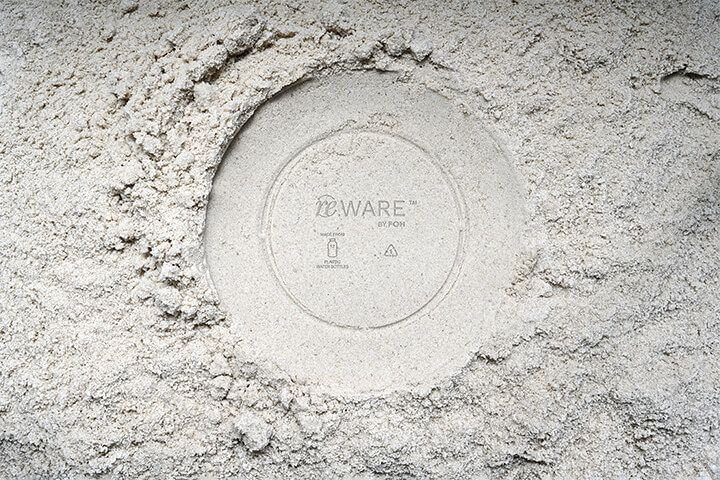
What’s extra amazing about this line, that your customers will Love, is each piece of dinnerware is imprinted with the number of water bottles used to make it, so they can directly see their impact right away, in your restaurant or hotel. Providing an immediate, visible reminder of their positive environmental impact makes your customers feel good about their patronage because it turns their dinner plate into a success story about conservation. What’s better than that?
Introducing the Onda™ Collection
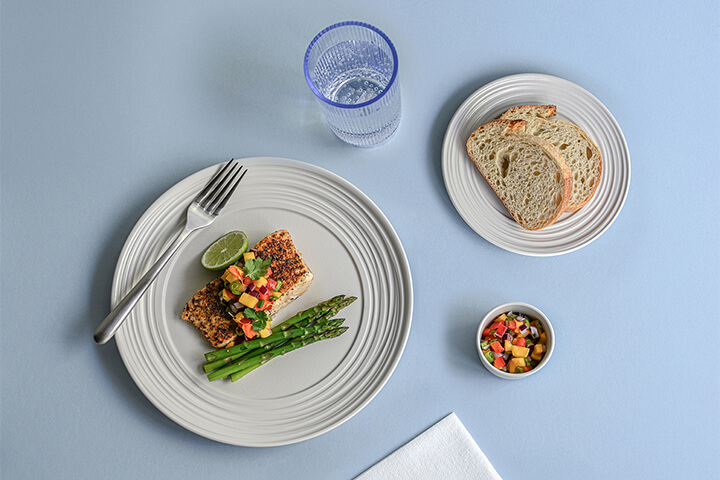
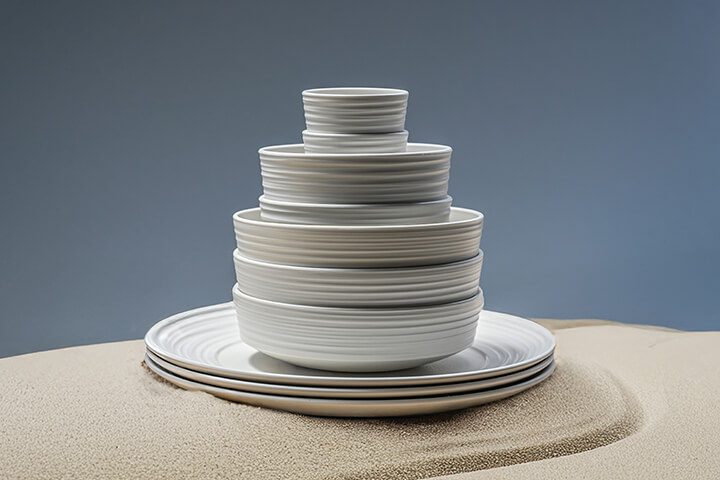
Onda™, the first FOH® collection made from re.WARE™ includes all essential foodservice sizes and capacities. Since it was made for commercial use, re.WARE™ withstands daily use in high-volume foodservice operations.
Onda™, meaning “wave” in Spanish, is:
- Commercial dishwasher and microwave safe
- BPA, Phthalate, and PFAS free
- Fade, crack, warp, and stain resistant
- Easily recyclable under category #1 (PET)
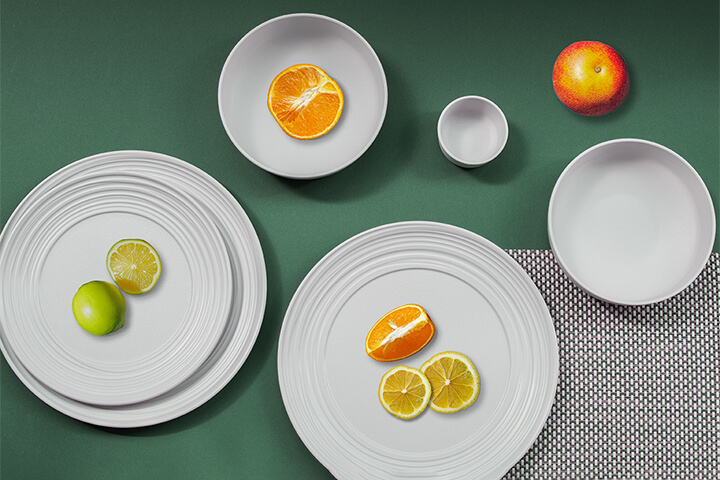
Looking at the Onda™ collection, you would never guess it was made from plastic bottles. Onda™ features textured curves and a neutral color suitable for any restaurant. Its intention is also visible in its design: Onda™’s wave-like pattern reflects the movements of the oceans it aims to protect, as well as the circular sustainability model.
At the end of its life, Onda™’s easy recyclability is the key to this initiative’s success. As long as operators commit to recycling, Onda™’s journey within your restaurant or hotel contributes to a sustainable circular economy.
Sustainability Is the Next Big Investment

Modern consumers are highly conscious of their personal impact on the planet and want to support businesses whose values are aligned with their own. For many, sustainability is a core value, and responsible consumers are willing to pay a premium for meals at establishments whose values visibly align with their own. Now is the perfect time for restaurant operators to invest in products like Onda™ and solidify their brand identity as forward-thinking sustainability leaders.
Shop the Onda™ Collection
Partnered With 
FOH® is a women-owned, global foodservice and hospitality innovator that includes brands Front of the House® and room360®. Designed in Miami and distributed worldwide, we have created smart, commercial-grade products for over 20 years that deliver a WOW experience. We are culture and collaboration-driven, committed to building lasting relationships with our partners, and this is why our customer loyalty and brand reputation are unmatched.
The foodservice industry looks to Front of the House® for trend-forward tabletop and buffet presentations. Through close relationships and dedicated market research, we’ve locked down the recipe for designing and manufacturing extensive, cutting-edge collections that are easy on your bottom line.
Our forward-thinking design team consistently develops hundreds of new products each year by setting trends and fostering innovation, positioning us at the forefront of a dynamic and ever-evolving industry. We prioritize the preservation of our planet. This commitment is evident in our unique, environmentally-conscious collections and persistent efforts toward sustainability within our workspace.
