
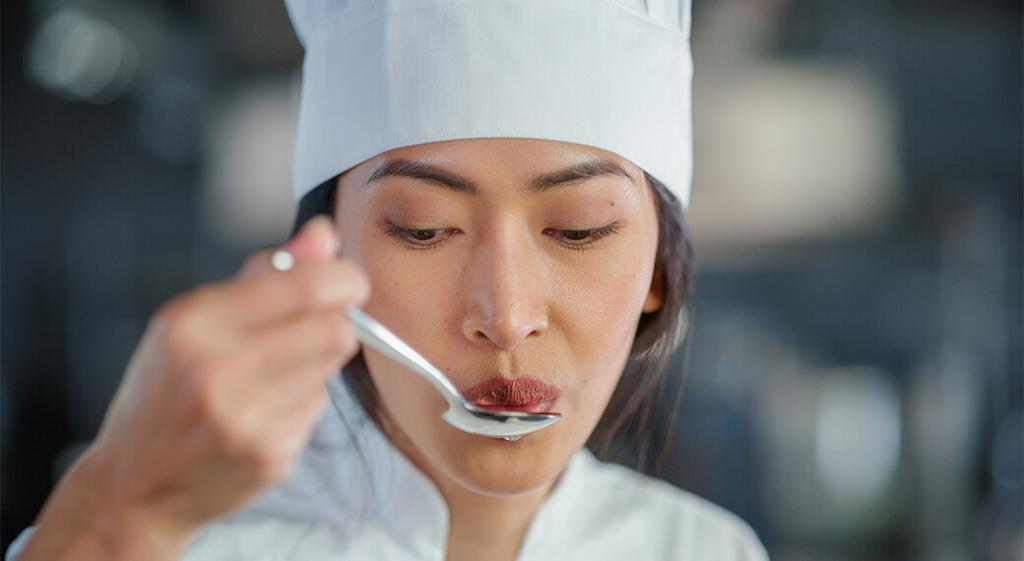

Ever wonder why some people absolutely cannot stand the taste of broccoli or why black coffee tastes intensely bitter to others? The answer lies in a physiological trait known as supertasting. In this article, we explore how supertasters are discovered, how they react to different flavors, and how they navigate their professional pursuits within the culinary and sensory fields.
What Is a Supertaster?
The term “supertaster” describes an individual whose sense of taste is significantly more intense than the average person’s. Coined in the 1990s by experimental psychologist Linda Bartoshuk, this classification is a measurable physiological difference.
Supertasters experience flavors with far greater intensity than the average person. Flavors are amplified. Sugar is sweeter, salt is saltier, and bitterness is often nearly intolerable. This heightened sensitivity extends beyond the five basic tastes (sweet, salty, sour, bitter, umami) to include oral sensations like the burn of chili or the texture of fat.
About 25% of people are estimated to be supertasters. Here’s the general breakdown from research:
- 25% → Supertasters (very sensitive to taste)
- 50% → Medium tasters (average sensitivity)
- 25% → Non-tasters (less sensitive to taste)
These percentages can vary a bit by population, sex, and genetics. For example, women and people of Asian or African descent are slightly more likely to be supertasters than men or people of European descent.
Why Are Some People Supertasters?
The biological basis for supertasting is primarily attributed to two factors. The first is genetic: a variation of the TAS2R38 gene, which codes for a bitter taste receptor, results in an increased sensitivity to compounds like propylthiouracil (PROP). The intensity of perceived bitterness from PROP is the scientific gold standard for identifying a supertaster.
The second related factor is anatomical: supertasters typically possess a much denser concentration of fungiform papillae compared to medium tasters or non-tasters. More taste buds mean more opportunities for food molecules to bind to receptors, thus amplifying the perceived flavor.
How Is Supertasting Measured?
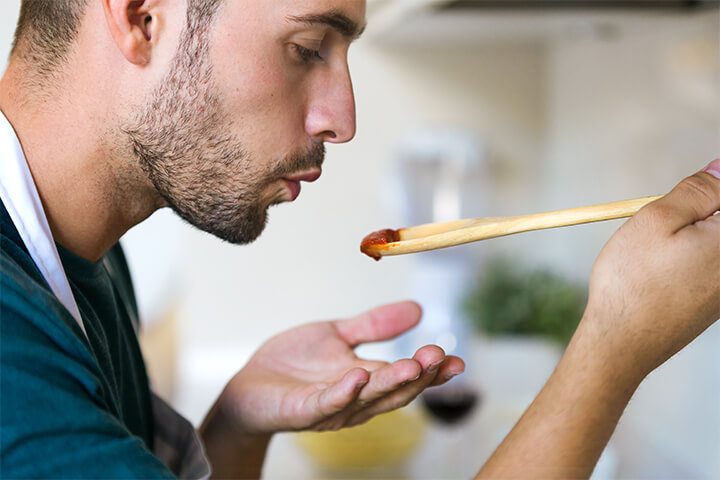
Supertasting is measured using chemical taste tests and sometimes tongue anatomy. The most common method is to see how someone reacts to certain bitter-tasting compounds: PROP (6-n-propylthiouracil) and PTC (phenylthiocarbamide).
These compounds are extremely bitter to supertasters but almost tasteless to non-tasters. The participant simply places a small paper strip coated with PROP or PTC, and their reaction reveals their taste sensitivity.
Another way to test is to stain the participant’s tongue with blue food coloring. A small area (6 mm) is examined and counted for its number of papillae (pink bumps). Supertasters generally have 30–60+ papillae in that small area.
Life as a Supertaster
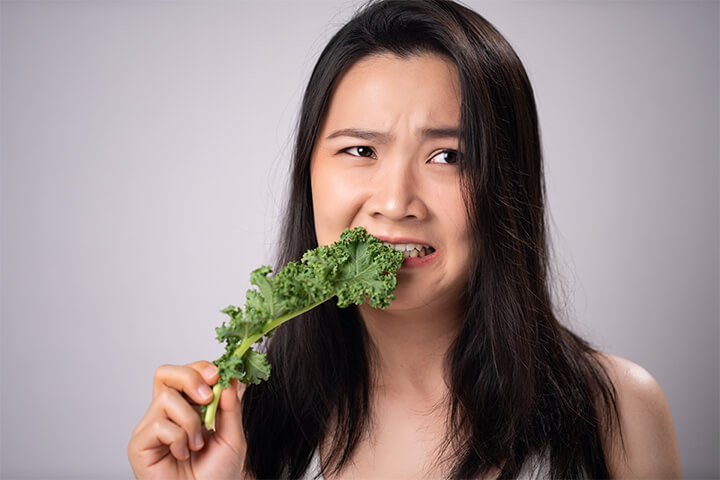
Being a supertaster presents a balance of benefits and disadvantages that affect everything from daily diet to health outcomes. The primary advantage is a stronger sense of taste, as well as a finer ability to discriminate small changes in the concentration of tastants.
The central challenge for supertasters is a pronounced aversion to bitter compounds. Many cruciferous vegetables, such as broccoli, Brussels sprouts, and kale, contain beneficial, naturally occurring glucosinolates that taste overwhelmingly bitter to supertasters.
Furthermore, the heightened sensation can extend beyond the five basic tastes to oral somatosensation — the perception of touch, texture, and pain in the mouth. For a supertaster, the burn of capsaicin (spicy heat) can feel more painful, and the texture of some fatty or creamy foods can be overly dense or unpleasant.
Supertasters in the Culinary World
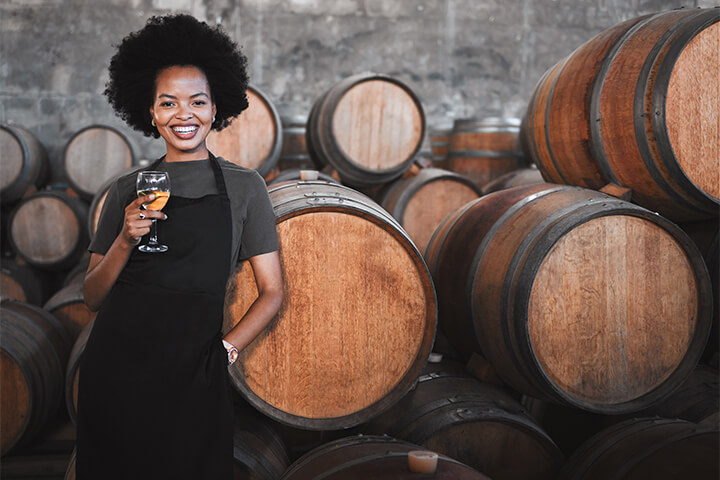
The common perception might be that a supertaster is a natural-born chef, restaurant critic, or sommelier. Their acute palates can identify subtle nuances or flaws that an average taster would miss, making them exceptional candidates for roles in quality control, flavor development, or sommelier training. While this is true for all intents and purposes, their sensory perception can be a double-edged sword in some creative culinary roles.
Menu Development
A chef or food developer with a supertaster’s palate can ensure that a dish’s complex flavors are perfectly balanced, preventing bitterness from dominating or sweetness from cloying. Conversely, a restaurant whose clientele are mostly average or non-tasters might find a supertaster’s preferred recipe too subtly flavored for mass appeal.
Sensory Science
Food and beverage manufacturers, flavor and fragrance houses, and research institutions rely on highly sensitive palates to perform detailed sensory analysis. A supertaster can detect subtle off-notes, discrepancies in ingredient levels, or nuances in flavor profiles that might be completely missed by the average taster.
Product Development
In product development, supertasters act as extremely accurate instruments. Their ability to perceive flavor intensity at a greater magnitude allows them to guide the formulation of new products or the reformulation of existing ones. For instance, in the development of low-sodium, low-sugar, or high-fiber foods, where substitute ingredients often introduce bitter or metallic aftertastes, a supertaster can quickly pinpoint the minimum concentration of a masking agent required to make the food palatable for the majority of consumers. They are instrumental in ensuring quality control and consistency in mass-produced goods.
Specialized Culinary Roles
Some supertasters excel in specialized beverage tasting roles, such as tea, coffee, beer, and wine, where the focus is on discerning minute differences in quality, origin, and processing techniques.
However, a chef’s role is generally to cook for the average palate, and a supertaster’s heightened perception may make the food they prepare over- or under-seasoned for others. If they personally find common bitter ingredients like dark chocolate, coffee, or certain beers unpalatable, their experience and understanding of how to balance these flavors might be limited without dedicated training.
Successful supertaster chefs or critics learn to mentally calibrate their extreme experience to align with the population’s median response, using their sensitivity for analysis but not necessarily as their sole guide for preference.
Restaurant Critics
Are supertasters as restaurant critics too unfair? While their heightened sensitivity allows them to notice minor imperfections, their sensory experience is far removed from the majority of the dining public.
If a critic finds a dish overwhelmingly bitter that the average diner finds pleasantly complex, the review becomes less relevant to the average reader. Critics are generally expected to judge food based on an objective standard of culinary execution and balance, not purely on personal preference. Therefore, for a supertaster to be an effective critic, they must possess a high degree of gustatory education to distinguish between their natural aversion and a genuine flaw in the food’s preparation.
The Intensely Perceived World of Supertasters
Ultimately, the supertaster classification offers a fascinating look into the physiological diversity of the human palate. While their heightened sensitivity makes them invaluable in specialized roles within the culinary and sensory science fields, it also introduces daily challenges, for instance, balancing personal aversion with professional judgment.
If you had a choice, would you be a supertaster? Let us know why or why not in the comment section!
