


National Housekeeping Appreciation Week 2025 (September 14–20) is just around the corner, and it’s the perfect time to talk about an important practice that is commonly neglected: tipping hotel housekeepers.
Few roles are as foundational and yet as often overlooked as that of hotel housekeeping. Without them, hotels would quickly lose the cleanliness and order that define a relaxing stay. In fact, the ability of a hotel to provide a comfortable, enjoyable experience rests heavily on the unseen efforts of its housekeeping staff, making them absolutely essential to the business.
While tipping ought to be a mandatory practice for hotel guests, it is widely misunderstood and inconsistently applied. Our guide explains the importance of tipping hotel housekeepers and provides clear guidelines to cut through the confusion.
In Reality, Fewer Than Half of Guests Leave Tips
In the United States today, hotels are legally required to pay housekeepers at least the federal or state minimum wage, which is not considered a living wage.
Hotel operators are aware that tipping in the hospitality industry has created a de facto system where gratuities are factored into the workers’ financial expectations. But relying on tips to supplement a low hourly wage creates an unstable and unpredictable income stream, as tips are entirely dependent on the goodwill and awareness of guests.
Housekeeping staff are overwhelmingly women, and many are immigrants supporting families. The work is physically grueling, and injuries are common. Unlike workers in customer-facing roles, housekeepers remain invisible to most guests. Their labor is both essential and hidden, which makes them particularly vulnerable to being undervalued. To their detriment, studies show that only 20–30% of hotel guests leave a gratuity for the people who clean their rooms. For the other 70–80%, the most common reasons they do not tip are:
- “I didn’t know I was supposed to.”
- “I thought it was included in the room rate.”
- “I never carry cash anymore.”
- “I didn’t see my housekeeper, so I didn’t think of it.”
Over the course of a year, inconsistent tipping can mean thousands of dollars lost. For workers already on tight budgets, they depend on gratuities to bridge the gap between low wages and the actual cost of living.
Tipping Guidelines for Hotel Guests
Now that we’ve established that inconsistent tipping can determine whether a housekeeper can afford necessities like groceries, rent, school supplies, and basic health care, we’re here to make tipping easier with straightforward information.
How Much Should I Tip?
For those wondering how much to leave, hospitality organizations and labor groups recommend the following guidelines.
- Budget and Economy Hotels: For these properties, where amenities are minimal and the primary focus is on a clean, functional room, a tip of $3 to $5 per day is standard and highly appreciated. This range reflects the baseline work required to clean and prepare a room.
- Mid-Range Hotels: At hotels with more services, such as on-site restaurants, a gym, and more detailed room setups, a tip of $5 to $7 per day is a more appropriate show of gratitude. These establishments often have higher standards for cleanliness and presentation, requiring more time and effort from housekeepers.
- Luxury Hotels and Resorts: In high-end establishments, housekeepers are often expected to provide a higher level of service, which may include nightly turndown service, meticulous attention to detail, and a larger, more complex room to clean. In these cases, a tip of $7 to $15 per day, and sometimes even more, is an appropriate acknowledgment of the increased workload and higher service expectation.
When Should I Leave a Larger Tip?
Beyond the hotel’s star rating, consider the following factors when tipping to ensure it is a fair reflection of the service provided:
- Room Condition: If your room is left in a state that requires a significant amount of extra work — for example, extensive trash, unpleasant odors, or spilled food and drink — a tip at the higher end of the recommended range, or even above it, is a respectful gesture.
- Special Requests: Did you ask for extra towels, pillows, or amenities? Did you need a late checkout? These requests add to the housekeeper’s workload and warrant a slightly increased tip.
- Mess and Room Size: If you’re staying in a large suite, a villa, or with a family that might create a bigger mess, a more generous tip is appropriate to compensate the staff for the extra time and effort required.
Should I Wait Until the End of a Stay to Tip?
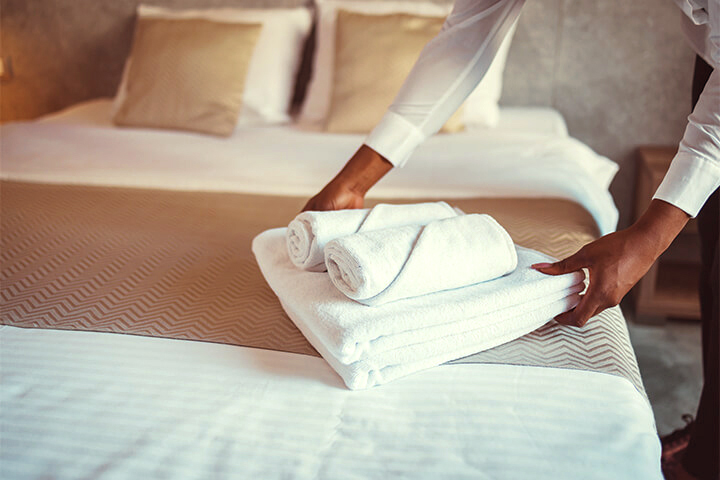
Another key detail is when to tip. We recommend leaving tips daily, rather than at the end of the stay. Housekeeping shifts rotate, and the person cleaning your room on Monday may not be the same person on Thursday. Leaving money each day ensures the right worker receives it. Cash is preferred, placed in a visible spot with a note clearly indicating it is for housekeeping.
Where Are the Best Places to Leave a Tip?
The goal is to make it clear that the money is an intentional tip and not a forgotten personal belonging. The most common and recommended locations are on the desk, on the dresser, near the television, or near the phone. These spaces are visible, flat surfaces where the cash will stand out.
Another recommendation is to leave a simple, handwritten note that says, “Thank you for cleaning the room” or “Housekeeping Tip” so that there are no doubts about who that money belongs to. Many hotels provide small notepads and pens for this purpose. Lastly, some hotels provide envelopes specifically labeled “Housekeeping Gratuity.” This is the best option if available.
How Do I Tip if I’m Not Carrying Cash?
Fewer people are carrying cash now that electronic payments are ubiquitous and convenient. As such, hotels are increasingly adopting technology to address the issue of guests not carrying cash. Some hotels place cards or signs in rooms with a unique QR code linked to housekeeping, allowing guests to use their phones to tip with a credit card or digital wallet like Apple Pay or Google Pay. This system ensures that tips go directly to the individual housekeeper or are distributed equitably among the staff.
Your Role in Fair Compensation
The hospitality industry depends on the labor of housekeepers, yet their contributions remain underappreciated. As travelers, we have a responsibility to close that gap. Tipping daily is the simplest, most direct way to show respect, provide fair compensation, and correct an imbalance in how we value essential workers.
To every housekeeper in hotels across the country: thank you for your hard work and for making rest and comfort possible.
To every traveler: if you enjoy fresh sheets, a tidy space, and the luxury of taking a break from household chores, remember that someone made that happen. Don’t leave your gratitude unseen or unspoken. Leave a tip. Every stay. Every day.
