
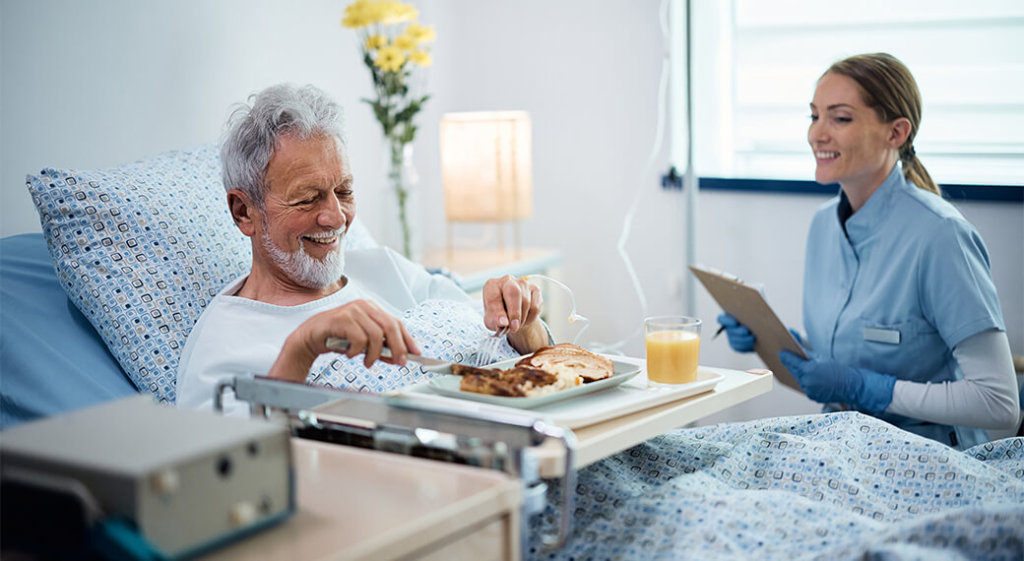

Since the mid-20th century, hospital food was produced in large batches, loaded onto tray lines, and delivered according to rigid schedules. While this institutional model serves an operational purpose, it leaves patients with inconsistent food quality and meals arriving when they are not hungry. The result is untouched trays, dissatisfied patients, and waste.
Numerous hospital systems have concluded that this isn’t the best approach. Instead, patient-centered meal programs are improving healthcare foodservice and positively contributing to patient outcomes. Here’s how.
A Hospitality-Inspired Service Model

The alternative foodservice program in healthcare systems is room-service dining. Patients order from an à la carte, chef- and/or registered-dietitian-developed menu, often by phone or tablet, and receive their meal within 30 to 45 minutes, cooked to order.
Room-service dining allows patients to order meals when they are hungry rather than when the kitchen schedule dictates. Expanded menus, made-to-order preparation, and restaurant-style ordering provide greater autonomy while accommodating dietary restrictions and physician orders.
The result is a nutritious dining experience. When culinary and nutrition professionals lead kitchen operations and introduce cook-to-order methods, the entire perception of hospital food changes for the better.
Better Meals Support Better Outcomes

Implementing a patient-centered, room-service model results in higher patient satisfaction scores, lower malnutrition rates, and reduced food waste.
Increased Patient Satisfaction

A study of three Canadian hospitals that adopted an on-demand dining model found satisfaction scores rose at every site. Research out of Australia’s Mater Group found similar results: room service improved nutritional intake, reduced food waste, and increased satisfaction compared to a traditional tray line, all in the same study.
Fresh, hot, appetizing food transforms an otherwise clinical environment into a human-centered recovery space.
Decreased Malnutrition
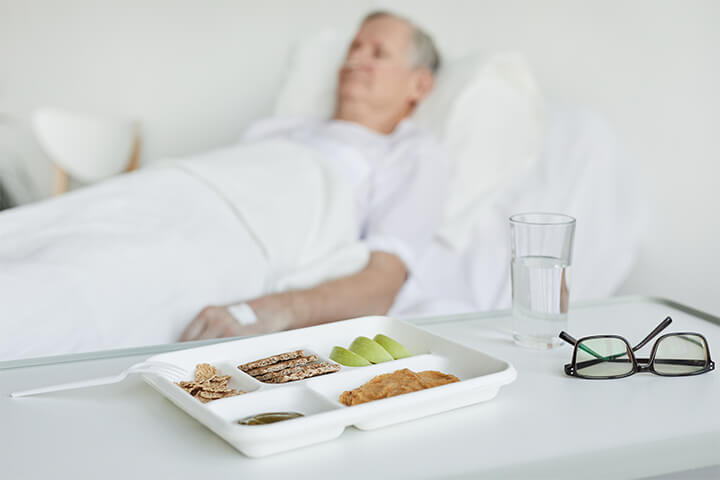
Malnutrition is a problem for patients, affecting a substantial portion of hospitalized adults and contributing to longer recovery times and increased complications. Even nutritionally balanced meals cannot provide clinical benefits if patients leave most of the food untouched.
Room-service models solve this issue because patients eat when their appetite is strongest instead of sticking to a strict schedule that is out of their control. Freshly prepared meals with appealing flavors and a nice presentation further encourage eating, increasing the likelihood that patients meet their nutritional needs during recovery.
Foodservice alone does not determine clinical outcomes, of course, but nutrition is an important component of recovery. Better meal consumption supports healing, strength, and mood throughout their hospital stay.
Reduced Waste

Hospitals waste approximately 288,401 tons of food per year. Room-service dining also lowers food waste, which ultimately lowers costs and supports sustainability. In traditional tray-line production, any change in patient status including discharges, procedures, transfers, or diet modifications leaves prepared meals uneaten. That’s in addition to patients who don’t feel well enough to eat, patients who are sleeping, or patients who simply aren’t hungry at the time the food arrives.
When meals are prepared in response to real demand, overproduction is greatly reduced while ingredient waste and inventory management improve. Digital ordering systems also provide valuable data that allow foodservice departments to identify trends, optimize purchasing, and continuously refine menus based on patient preferences.
For healthcare organizations pursuing sustainability goals, these improvements translate into measurable reductions in food waste and disposal costs.
Building a Patient-Centered Kitchen
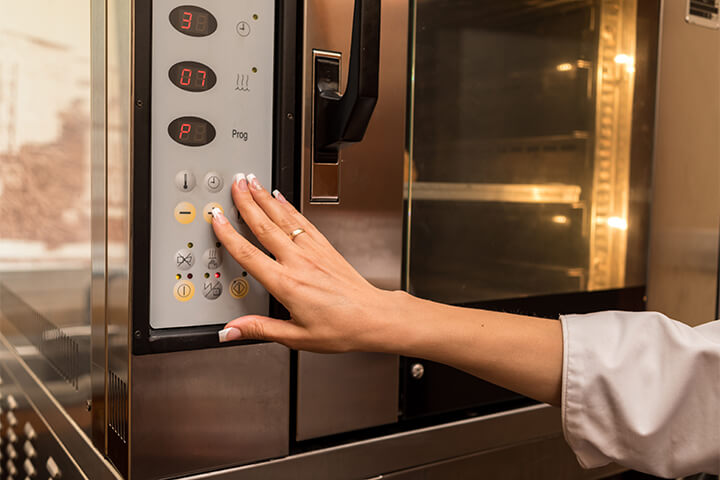
Hospital room-service programs require equipment upgrades to support restaurant-style production at an institutional scale. Here is a sample of the commercial equipment hospitals usually need to purchase to jumpstart a successful new foodservice program.
Griddles
Commercial griddles (also called “flat tops”) have a large, evenly heated flat-top surface that lets hospital kitchens batch-cook eggs, proteins, and griddle items quickly for high-volume tray lines without sacrificing consistency across servings. For patient-centered foodservice, a griddle’s even heat distribution reduces overcooked or undercooked portions on modified-texture and therapeutic diets, while faster batch turnaround helps meals hit the tray line hot and on schedule.
Combi Ovens
Combi ovens combine convection heat with injected steam in one unit, letting hospital kitchens roast, steam, bake, and reheat across a wide range of menu items without moving food between multiple pieces of equipment. This versatility supports consistent execution of therapeutic and modified-texture diets, while precise humidity and temperature control helps retain moisture and nutrients in food that often has to be held or reheated before it reaches the patient.
Induction Cooktops, Warmers, and Rethermalizers
Energy-efficient cooktops offer quick, precise boiling or pan cooking at individual stations with minimal ambient heat. Induction cooktops, warmers, and rethermalizers heat cookware directly through electromagnetic energy instead of an open flame or exposed element, so surfaces stay cool to the touch and kitchens run safer around staff plating meals for patients on tight nutrition and timing requirements. The precision of induction cooking means fast, consistent reheating for individualized diets, less ambient heat in prep areas, and lower risk of burns.
Putting Patients First

Patient-centered dining turns hospital foodservice into a genuine part of the care experience. Patients eat more, kitchens waste less, and care teams gain a foodservice model built around real demand. For hospitals ready to rethink what patient meals can be, this model offers a proven place to start.
