

Testing your worn or old smallwares and equipment is a proactive way to stay ahead of health inspections, prevent cross-contamination and foodborne illness, and serve the highest-quality food possible. Here is our quick and easy guide for determining if your smallwares and equipment are safe to use.
How to Spot Unsafe Smallwares & Equipment
For any worn or old piece of equipment, run through the questions below to determine potential safety risks. If the answer to any of these questions is no, stop using the item until it is repaired, resurfaced, or replaced.
Structural Integrity
- Is the item structurally intact?
- Are all parts secure?
- Do all moving parts operate as they were designed to?
To answer yes, it must be free from cracks, breaks, loose parts, failed welds, major dents, and warped components. Don’t forget to check components like handles, casters, legs, and supports.
A broken weld on a speed rack, for instance, means the frame could collapse when it is moved. Similarly, if slide trays are bent, loaded sheet pans could slip out of alignment and cause a real hot mess.
Cleanliness & Sanitation
- Can your object still be cleaned and sanitized?
If your item contains any deep grooves, cracks, pits, or open seams, the answer is most likely no.
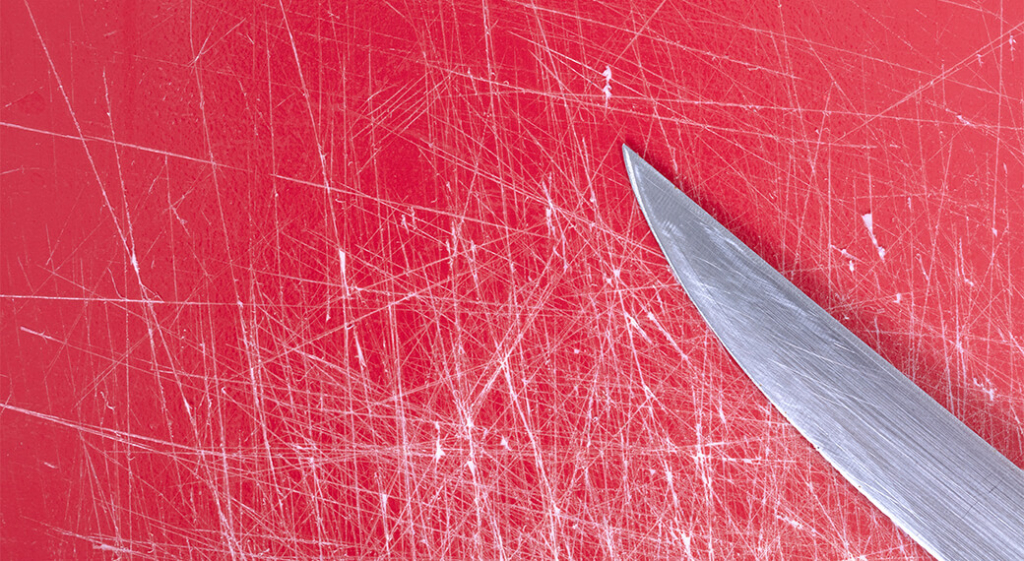
For example, consider a cutting board with deep knife grooves. Grooves hold moisture and food residue below the reach of a scrub brush or sanitizer. This gives bacteria a place to fester and grow. Now, this item can transfer pathogens to the next ingredient cut on the board. Health inspectors cite cutting boards like this because food-contact surfaces must be smooth and easily cleanable.
Fit & Function
- Can your item still reliably perform its job?
If items do not sit level, collapse, move when they shouldn’t, or fail to fit into the equipment they were designed for, the answer is no.
For instance, a sheet pan that doesn’t sit flat heats baked goods unevenly and browns faster on one side than the other. Replacing this pan prevents inconsistent quality and wasted batches.
Physical Hazards & Contamination
- Could your item contaminate food or create a physical hazard?
Metal, coatings, plastic, wood, or rubber can all break off into food.
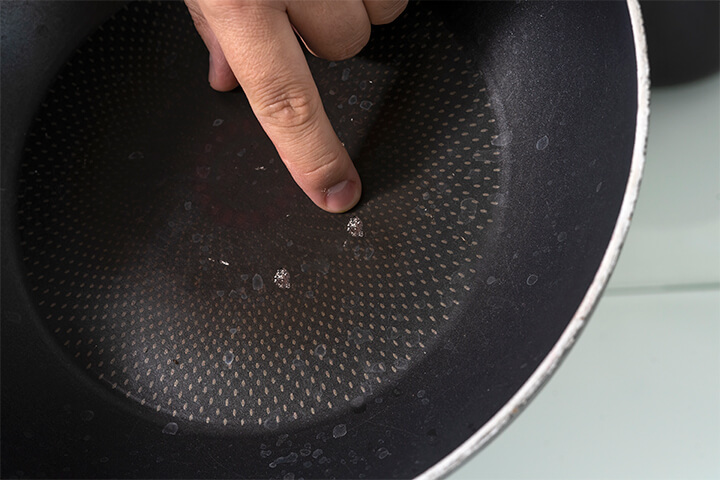
A common example is when a nonstick pan has coating that flakes off. Eventually, those fragments will end up on a guest’s plate. Or take a wooden utensil with splintered edges. When splinters break off in sauce or soup, they are difficult to spot and might get eaten by guests.
Progressive Damage
- Is the damage getting worse?
If the damage is a small dent, for instance, it may not have any effect on function. Any bent component, however, progressively distorts, cracks, loosens, or affects stability and should be removed from service.
For example, stock pots with a creased base develop hairline cracks. Eventually, those cracks turn into leaks which risk scalding staff.
Final Safety Check
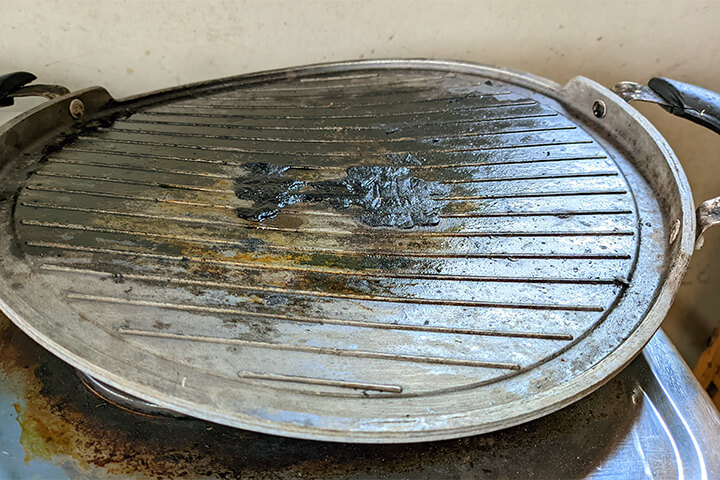
As you see, even minor imperfections can turn into dangerous situations in commercial kitchens. Stay safe by always reporting, replacing, or repairing damaged equipment and smallwares immediately, and choose NSF-certified products whenever possible.
Key Takeaways
What should you do if worn equipment fails a safety check?
Stop using it until it is repaired, resurfaced, or replaced.
Why are cutting boards with deep knife grooves a sanitation risk?
Grooves trap moisture and food residue, which creates an environment for bacteria and biofilm to flourish.
How can a damaged sheet pan affect food quality?
Sheet pans that sit unevenly also bake unevenly.
Why should bent or dented components be removed from service?
Bent or dented components progressively distort, crack, loosen, or affect stability.
