

Carbon labeling on menus has moved beyond pilot programs into an increasingly common feature across hotels, contract catering, and, to a lesser extent, restaurants. Driven by both corporate sustainability commitments and growing consumer demand for transparency, operators are testing different approaches to signal which dishes carry a lower carbon footprint.
Hotels Lead, Restaurants Follow

Hotels are currently ahead of restaurants in implementing carbon identifiers. Global groups such as Accor, Hilton, and Marriott have incorporated menu labeling into sustainability initiatives tied to net-zero targets. These groups operate across markets where corporate clients — particularly in Europe — expect clear reporting on environmental impacts, including food-related emissions. Corporate catering companies are also pushing the practice, often in partnership with organizations like the World Resources Institute’s Cool Food program, which provides methodology and standards for calculating dish-level carbon footprints.
In the fast-casual restaurant space, companies like Panera Bread and Just Salad have been pioneers. Panera, in collaboration with the World Resources Institute (WRI), uses a “Cool Food Meal” label to identify dishes with a low climate impact. Just Salad, another early adopter, has used carbon labeling to create a “climatarian” menu, which has resulted in a significant sales increase for those items.
Independent restaurants are moving more cautiously, mainly due to resource constraints and uncertainty around how guests will respond. Where adoption is taking place, it is often in higher-end urban markets with customer bases already familiar with ESG concepts.
Carbon Labels & Customer Choices

Initial data suggests that low-carbon menu identifiers do influence guest behavior. A study by Johns Hopkins Bloomberg School of Public Health found that “high climate impact” labels on burgers increased non-beef choices by 23%. This indicates that negative framing can be a powerful tool for behavior change. However, advocating against their own menu items is an unorthodox technique that may puzzle customers.
Other case studies continue to highlight the complexity of guest behavior. For instance, one initiative demonstrated that 63% of surveyed guests reported choosing a lower-carbon dish because of labeling, yet actual sales data showed the specially designed low-carbon dishes were not top sellers. This points to the gap between expressed intent and actual ordering behavior, which is a challenge operators will need to address through menu engineering, pricing, and positioning.
Other pilots in European corporate catering have shown stronger adoption when carbon identifiers are presented as part of a traffic-light system (green, amber, red) rather than as raw carbon numbers. Simplification and visual cues appear to matter more than technical precision when nudging guest choices.
Calculating a Dish’s Carbon Footprint
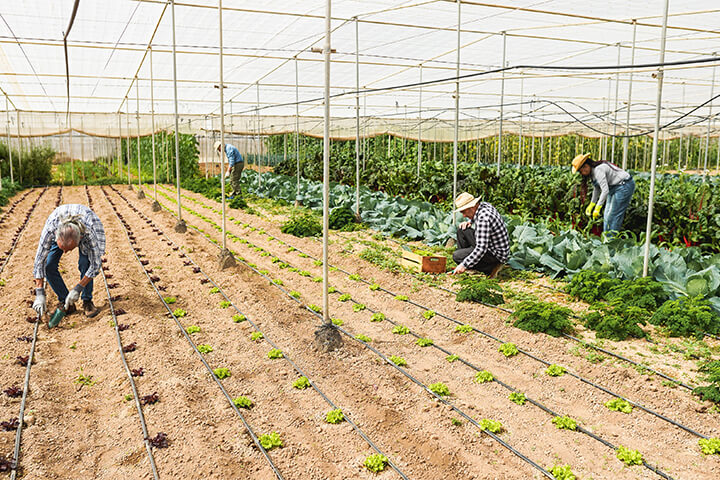
Calculating the carbon footprint of a single dish is a complex process that goes beyond a simple estimate. It requires a detailed, scientific approach to account for all emissions throughout a product’s lifecycle starting at the farm. The standard unit of measurement is kilograms of CO2 equivalent (kg CO2e), which accounts for all greenhouse gases, not just carbon dioxide.
Because of the complexity, operators typically rely on one of three approaches:
- Lifecycle Assessment (LCA) Databases – Specialized providers (e.g., Eaternity, Klimato) maintain ingredient-level emission factors. Operators upload recipes, and the system calculates the total CO2e footprint per serving.
- Partnership Programs – Programs like Cool Food provide not just emissions data but also guidelines for defining “low carbon” thresholds, staff training, and reporting templates.
- Third-Party Consultants – Larger hotel groups often engage consultants to develop standardized methodologies that can be applied globally, ensuring consistency across regions.
Why Carbon Labels Are Here to Stay

Guest demand, particularly among younger demographics and corporate travelers, suggests that carbon identifiers will continue to expand. What indicators or icons are on your menu and will they include low-carbon in the future? Let us know in the comment section!
