
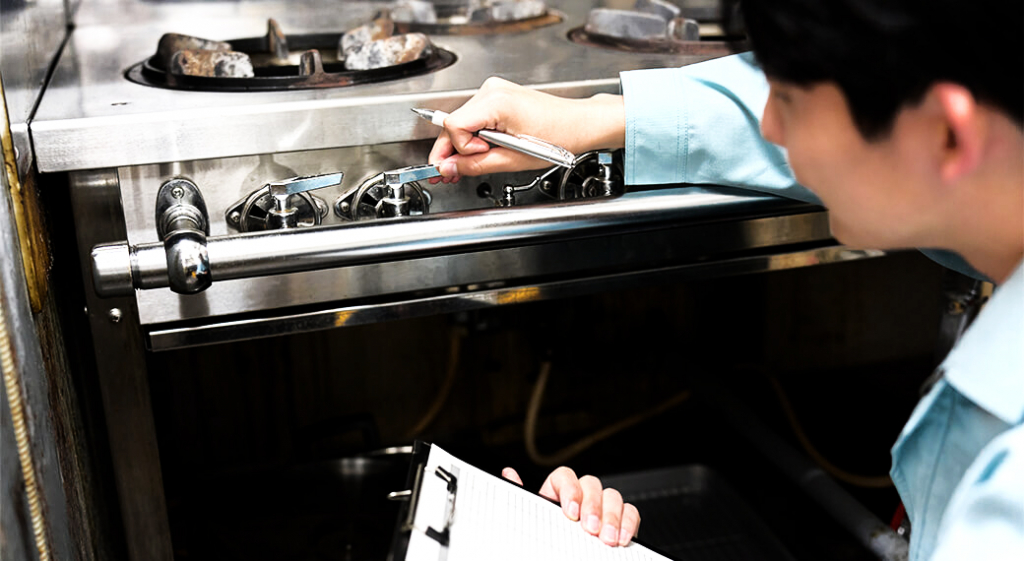

A fully equipped commercial kitchen may be hiding problems behind walls, above ceiling tiles, and beneath your feet. What’s more, the previous tenant’s habits, shortcuts, and deferred maintenance become your problem the day you sign. If you are looking to move into an existing commercial kitchen that also comes with its own equipment, this article is for you.
First, the Paperwork

Before you evaluate the potential of the building’s systems and equipment, you’ll need to go over the paperwork with a fine-tooth comb for any problems that could end the deal before inspections even begin.
Lease or ownership terms
Confirm who is responsible for the hood, roof, grease trap, HVAC, and structural items. If the lease pushes these onto the tenant, an aging hood system could cost tens of thousands to replace.
Get to know the kitchen’s history
Verify that the space is approved for the type of cooking you plan to do. For example, a kitchen permitted for light prep won’t necessarily be approved for fryers.
Then, request inspection reports dating back to two or three years, minimum. Repeat violations for pests, temperature control, or drainage point to physical problems and it is always good to see how things were run prior to the property changing hands.
Finally, ask for documentation on any renovations. Unpermitted work, such as an added sink, can become your liability.
Equipment ownership
Get everything in writing, including a list of what equipment stays (leaving no room for interpretation) and whether any items are leased or financed, and their inspection and cleaning records.
Ventilation, Fire Safety, & Gas
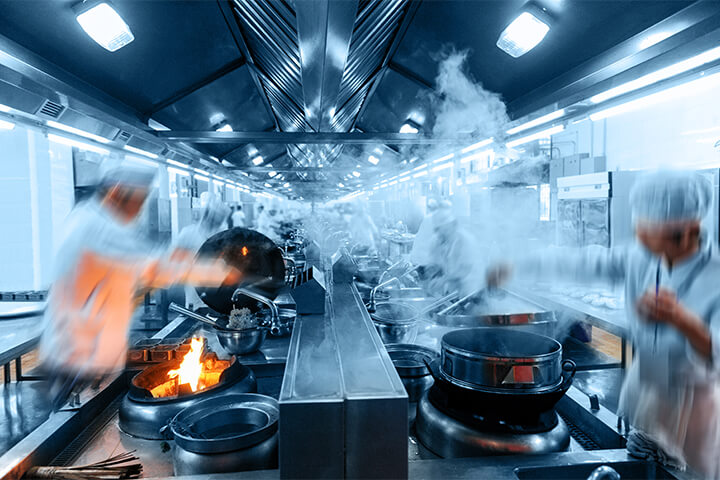
Once you’ve done your due diligence with the paperwork, move on to the areas where problems are the most serious and most expensive to fix.
Hood and exhaust system
Check that the hood is the right type for the cooking underneath it. Look inside the ductwork for grease buildup and ask for cleaning records. Heavy grease accumulation is a fire risk and if you find any, consider it a red flag and strong indicator of how the kitchen was run.
Fire suppression system
The system over the cooking line should carry a current inspection tag, usually renewed every six months. Nozzle placement must match the equipment in place. If the previous operator swapped a range for a fryer without adjusting the nozzles, the system may not protect you. For details, contact the service company named on the tag attached to the hood or fire extinguishers.
Make-up air
Hoods pull air out, and the building has to replace it. A weak or missing make-up air unit causes problems including doors that are hard to open, pilot lights that blow out, and smoky kitchens.
Gas lines and shutoffs
Confirm that line sizing can support all the equipment on the line, check for an accessible emergency shutoff, and ask whether the gas company or a licensed plumber has tested the system. If there is any smell of gas or you find signs of corrosion, a professional evaluation should take place before moving in.
If you’re not sure about the sizing, hire an engineering firm to make that determination for you. It’s a small investment that helps ensure your equipment operates efficiently.
Plumbing, Drainage, & Grease Management
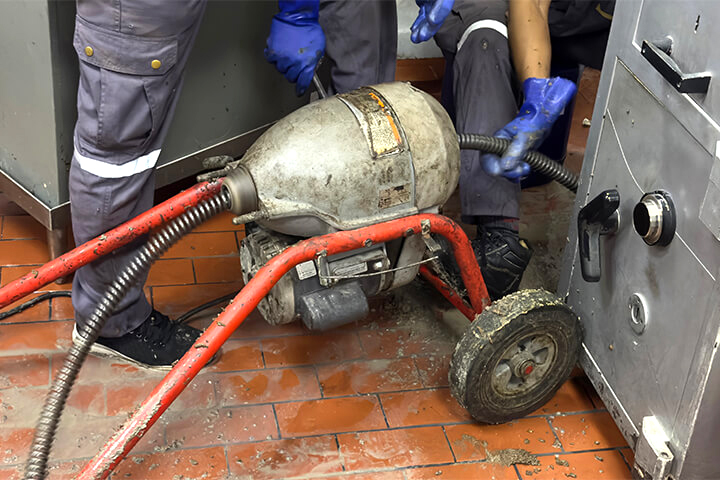
Plumbing tells you a great deal about the building’s history. Beyond looking for visible leaks, here are areas that require special attention.
Grease trap or interceptor
Grease traps are serious business. Find out where it is, how large it is, and when it was last pumped. Ask for pumping records. Confirm that the size fits your menu, since fry-heavy concepts produce far more grease than sandwich shops.
Floor drains, water heaters, and backflow
Test out floor drains by pouring water into each to watch how they drain. If their response time is slow, if you notice any foul odors, or any standing water, ask the seller when the lines were last jetted, and whether backups have happened before. Ask for the pumping and drain service invoices going back three years. All of this information will help you decide if the repairs are worth the investment.
Next, check that the heater’s recovery rate can keep up at peak service. Dish machines and three-compartment sinks require high volumes of hot water, so confirm the heaters weren’t sized for a lighter operation.
Additionally, look for backflow preventers on the water supply, dishwashers, and coffee equipment.
Electrical & Utilities

To start, ask for 12 months of gas, electric, and water bills so you can learn the real operating costs while looking for signs of leaks or inefficient equipment. Then move on to these important features to make sure the system can keep up with your future needs.
Panel capacity
Compare the amperage of the panel to the equipment load. If you were, for instance, looking to add a convection oven or a second fryer to an already full panel, surprise costs await.
Circuits and outlets
Another way to see if the system is stretched is to look for these clues: overloaded power strips, extension cords used as permanent wiring, and tripped breakers that were regularly reset.
Voltage and phase
Every piece of equipment is built to run on a specific type of electricity and buildings supply specific types of electricity. Confirm that those two features match.
GFCI protection
Make sure the kitchen includes ground fault circuit interrupters (GFCI), which are safety devices built into outlets or breakers that shut off power in a fraction of a second if electricity starts flowing where it shouldn’t.
Refrigeration & Cold Storage
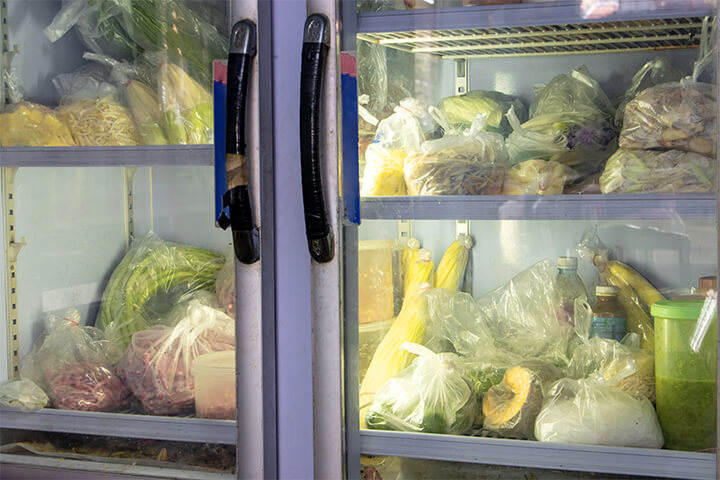
With refrigeration or cold storage failures, operators lose inventory and replacements are a major expense. Bring a calibrated thermometer and confirm that units hold safe temperatures: 41°F or below for refrigeration and 0°F for freezers. Check at multiple points, not just near the door. Plan to replace any unit older than seven years.
Walk-in coolers and freezers
Inspect door gaskets, hinges, and heaters on freezer doors. Look for ice buildup on evaporator coils, which signals defrost problems, and check the floor for soft spots, which can indicate water intrusion into the insulation. These units can hold thousands of dollars in inventory, so having a service company double-check them is a small price to pay.
Compressor age and service records
Compressors are expensive to replace. Ask for service records and look at the data plate for the age.
Cooking & Dish Equipment
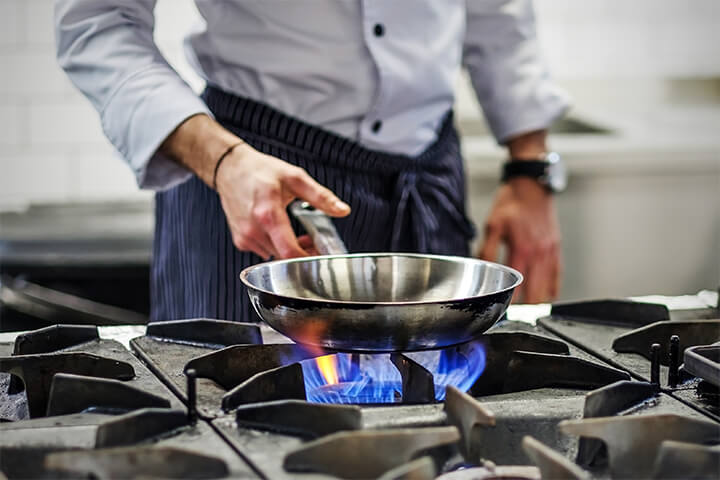
Really get to know the kitchen and test everything. Turn on every burner, oven, fryer, griddle, and steamer and use them as you would on a normal business day.
Check age and condition
Look at data plates for age and ask for service histories. Equipment past its expected life may work today then fail in six months.
Parts availability
If the equipment is old or from an obscure brand, service may be difficult. Confirm that parts and local technicians are readily available.
Dish machine
Verify wash and rinse temperatures, check chemical feed lines, and confirm the machine is the right size for your volume.
Ice machine
Poorly maintained ice machines easily become breeding grounds for bacteria and mold. When ice machines aren’t properly cleaned or maintained, accumulation of scale or other debris on internal parts occurs. This can have detrimental effects on important components like the evaporator. Inspect for scale, mold, and slime inside the bin and inside the machine. If care was neglected, it can take serious effort to bring back to sanitary conditions.
Warranties
Ask whether any warranties are still active and whether they transfer to a new owner.
Due Diligence Today, Fewer Surprises Tomorrow

Taking over an existing commercial kitchen comes with inherited risk, and the most expensive problems are rarely the visible ones. A thorough review of the paperwork, ventilation, plumbing, electrical, refrigeration, and equipment before you sign protects your budget and your opening date.
Key Takeaways
Where do I start inspecting a commercial kitchen and the equipment I’m inheriting or buying from the previous owner?
Review the paperwork first. Confirm who is responsible for the hood, roof, grease trap, HVAC, and structural items, verify the space is permitted for your type of cooking, request two to three years of inspection reports, and ask for documentation on any renovations, since unpermitted work becomes your liability.
How do I work out what equipment is staying in the commercial kitchen?
Get equipment ownership in writing. List exactly what stays and whether anything is leased or financed. Equipment older than seven years may be a candidate for replacement, since newer models offer better efficiency and longer warranties.
What part of a commercial kitchen should I inspect first?
Prioritize ventilation, fire safety, and gas. Check that the hood type matches the cooking, look for grease buildup in the ductwork, confirm the fire suppression tag is current and nozzles match the equipment, verify make-up air is adequate, and make sure gas lines are properly sized with an accessible shutoff.
What temperatures should I look for when testing refrigeration and cold storage?
When testing refrigeration and cold storage, use a calibrated thermometer to confirm 41°F or below for refrigeration and 0°F for freezers at multiple points.
Should I test items like ovens and dishwashers?
Yes, test all cooking and dish equipment. Run everything as you would on a normal day, check age and service histories, confirm parts and technicians are available, verify dish washing temperatures and sizing, inspect ice machines for scale, mold, and slime, and ask about transferable warranties.
What makes the commercial kitchen inspection process easier?
Partnering with Wasserstrom gives you expert guidance on replacements and upgrades, so you can move in with confidence.
