
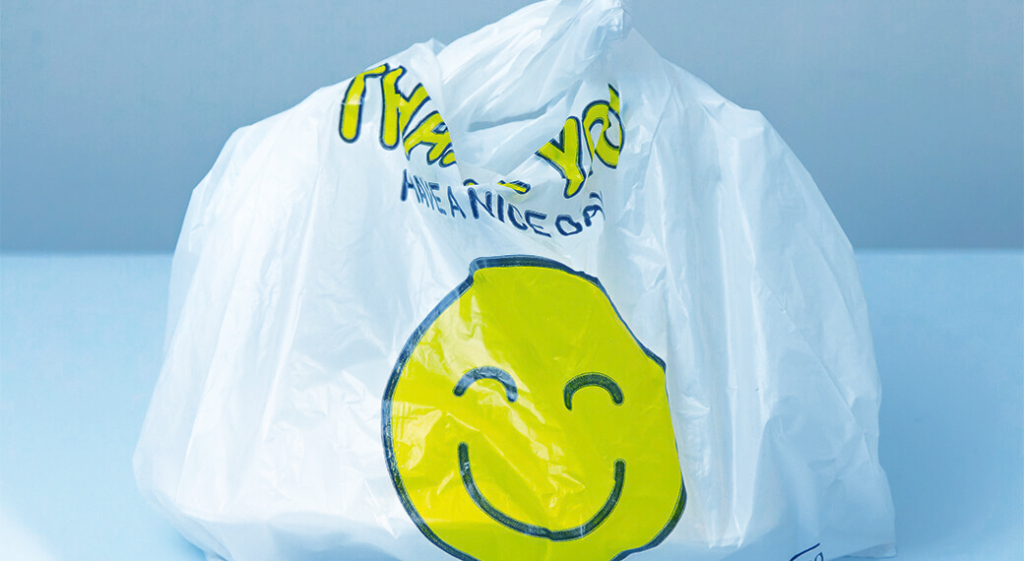

As of early 2026, across dozens of jurisdictions, plastic bags are being phased out. We give you the lowdown on the plastic bag bans, the adversaries, the economic reality for restaurants, and how to approach customer messaging.
States With Plastic Bag Bans

As of January 1, 2026, many regions have moved beyond partial restrictions to implement “loophole-free” bans. In the United States, California’s SB 1053 has officially taken effect, eliminating the “thick plastic” exception that previously allowed retailers and restaurants to provide heavy-duty plastic bags under the guise of reusability.
California (pictured above at Big Sur) and a dozen other states — New York, New Jersey, Colorado, Connecticut, Delaware, Hawaii, Maine, Oregon, Rhode Island, Vermont, and Washington — and more than 500 municipalities (for instance, 160 cities and towns in Massachusetts) have effectively removed single-use film plastic from the point of sale.
States With a Ban on Bans
In states like Florida, Ohio, and Texas, it is illegal to ban plastic bags due to “preemption laws.”
Legal Loopholes
Oftentimes, preemption laws exist due to state economic policies aligning with manufacturing interests above all others. For example, when Cincinnati, OH and Athens, OH passed local bans to protect Lake Erie and local waterways, the state legislature stepped in to override them.
In the Lone Star State, the Texas Supreme Court ruled that cities cannot prohibit or restrict a container for “solid waste management purposes.” Framing it as a different kind of waste issue gives Texas, and other states, the legal loophole they need to invalidate local autonomy.
Special Interest Groups
The ban on bans can also be traced back to two interconnected entities. First is the American Legislative Exchange Council (ALEC), a group that provides lobbyist-approved model legislation to conservative state lawmakers. The other entity is the American Recyclable Plastic Bag Alliance (ARPBA), also known as a lobbying arm of the plastics industry that relies on high-stakes legal bullying.
The Economics of the Switch
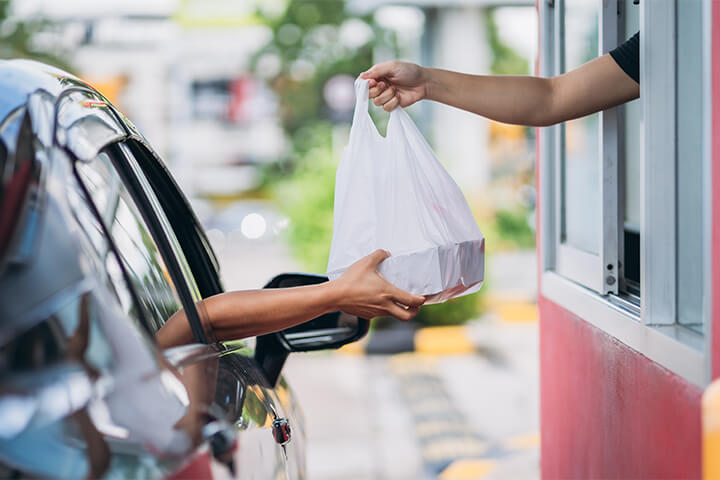
For restaurant owners, plastic bag bans may affect your bottom line if you don’t employ a solid strategy. It is a reality that, on a per-unit basis, traditional single-use plastic bags have historically been the cheapest option, often costing less than $0.01 per bag. High-quality recycled paper bags and compostable alternatives range between $0.04 and $0.08 per unit.
Some restaurants are offsetting these costs by charging customers an extra $0.10 or $0.15 cents at checkout. This model works well because many restaurants reach a point of “total cost of ownership” neutrality, where the bag no longer acts as a hidden overhead expense but as a self-sustaining part of the service.
Customer Communication
A successful transition largely depends on how a restaurant tells its story. Modern diners are buying into a brand’s ethics. Findings from the 2025 Sustainable Packaging Consumer Report state that 90% of consumers are more likely to support brands that prioritize eco-friendly packaging. Given that, smart operators are moving away from “the law says we have to” messaging to an environmental narrative.
The Ecological Dividend

Moving away from plastic is a necessary intervention. For the restaurant industry, the benefits are multi-layered:
- Marine Life Protection: Plastic bags kill sea turtles who mistake them for one of their favorite meals: jellyfish. Fish, sea birds, and marine mammals are also hurt by this pollution. By removing plastic bags from the waste stream, restaurants directly contribute to protecting wildlife.
- Infrastructure Relief: Thin-film plastic physically clogs recycling facilities. Conversely, paper or reusable options make the entire municipal waste system more efficient and less costly.
- Microplastic Reduction: When bags break down, they enter the food chain as microplastics. A plastic-free takeout experience ensures that the very industry providing food is not inadvertently contaminating the environment that produces it.
Cheers to a Circular Future
We are seeing a shift where the disposable mindset is being replaced by a durable one. The plastic bag ban is the beginning of a more thoughtful, intentional way of doing business. Restaurants that support these changes are showing others that they can serve and support their communities, without leaving a permanent footprint on the planet.
