
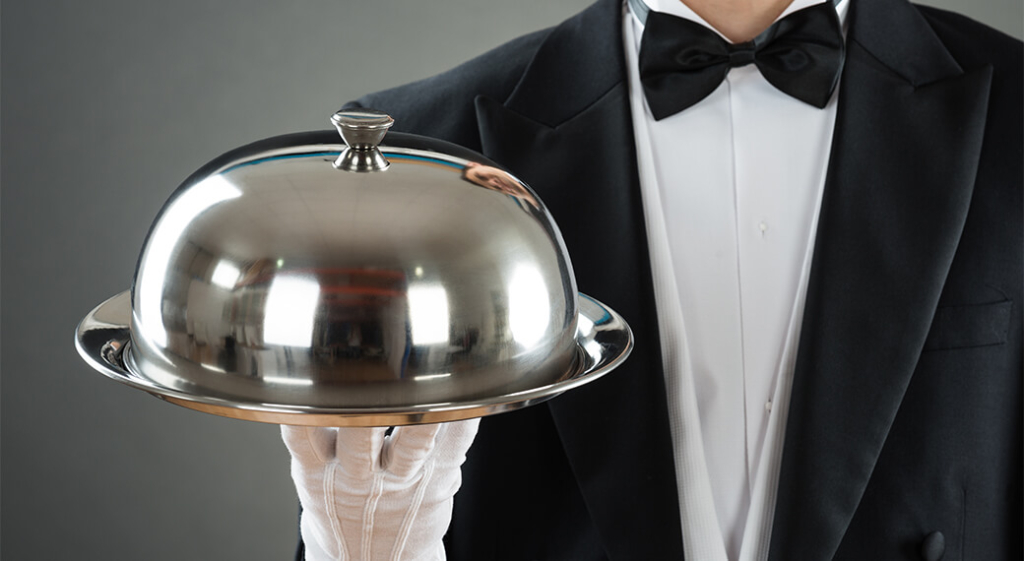

From a culinary perspective, the cloche understands that anticipation is a flavor unto itself.
At its simplest, a cloche keeps food warm and free from contamination en route between kitchen and table. However, its uses extend far beyond a protective layer. Here are four exemplary ways to use a cloche in modern dining.
1. Aromatic Smoke Infusion
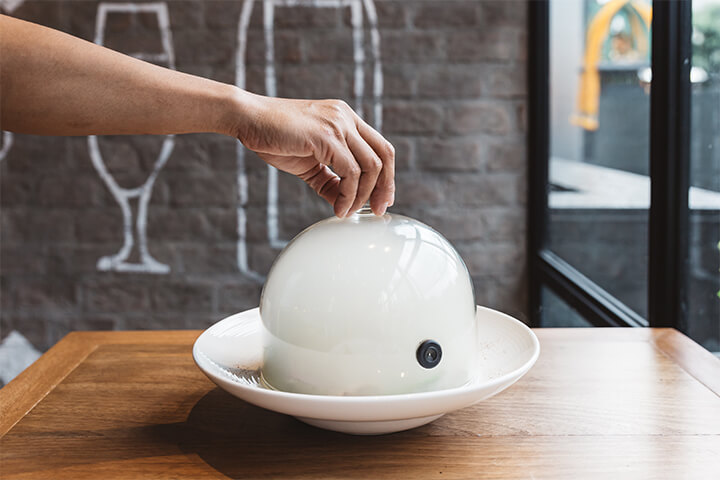
Aromatics are everything. This technique traps scents beneath the cloche to serve up an intense olfactory experience that whets the appetite. Here are the specifics.
Chefs use a smoking gun or similar device to inject cold, aromatic smoke into a sealed cloche that is placed over the food. The scents are often derived from applewood, hickory, tea leaves, and herbs which leaves tons of room for experimentation and variety, as there are no rules. The cloche should be lifted swiftly and dramatically by the server as the sudden release of the smoke or vapor primes the diner’s senses before the first bite.
Mist vs. Mystery
For further refinement, clear glass cloches allow the diner to see the dish shrouded in a swirling mist. On the other hand, opaque metal cloches provide a greater sense of anticipation before the smoky reveal. This high-impact technique is used across high-end restaurants, steakhouses, and cocktail bars globally, to establish a sensory signature for a dish.
2. Temperature Control
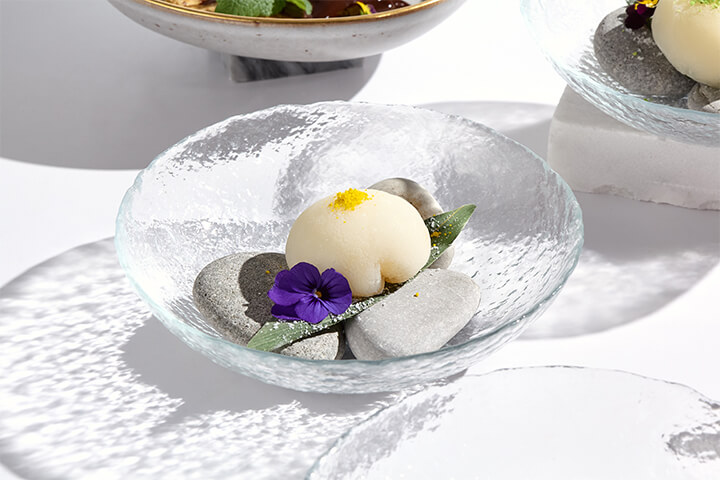
Maintain extremely cold temperatures right up to the final moment of service using a cloche. Glass cloches are the best for preserving the chilled state for delicate desserts. For example, maintaining the integrity of a highly delicate, fresh fruit sorbet with a fragile sugar element.
The Thermal Buffer Strategy
The first thing to consider when employing this technique is the base material. The best choices are a marble or stone slab to assist your cloche in temperature retention, while presenting a high-end aesthetic.
The cold marble or stone base acts as a thermal buffer, while the cloche seals in the cold air directly surrounding the dessert, preventing temperature-sensitive components from immediately softening as the plate leaves the kitchen. This technique ensures your guests receive the dessert in its intended frozen form and texture.
3. A Finishing Environment

This complex technique uses the cloche to trap moisture as a finishing element, creating a subtle, last-minute texture change or fragrance activation.
For example, when quickly marinating a protein or vegetable, place the ingredient on the plate with a highly volatile oil, citrus zest, or concentrated vinegar. Covering it instantly with a cloche traps the vapors, allowing the aroma and flavor to penetrate the surface quickly. The cloche is removed after a very short interval, perhaps 30 to 60 seconds, acting as a dramatic, visible timer for the final, flavor-imparting stage.
Every Second Matters
This application requires exact timing and a high degree of control, as the enclosed environment can quickly overcook or damage delicate components if left covered for too long. We recommend this technique for highly innovative kitchens who perfect every detail.
4. Synchronized Service

Born from practicality, this classic piqued between the 16th and 18th-century France, when aristocratic households and royal courts adopted silver domes to keep entrées warm and shielded en route from kitchen to table. Here’s how to perform a traditional cloche lift, service à la française style.
The Choreographed Lift
In short, each person has their own server, standing to the right, slightly behind the guests’ shoulders. The covered plate is placed squarely in front of them. Then, the servers place their fingers gently but firmly around the pommel or handle of the cloche while keeping their wrists straight and relaxed.
Next, the cloche is removed in a single, smooth, slightly upward and backward arc. The lift must be decisive and even to maximize the visual impact of the reveal while minimizing air disturbance.
Avoid the Clatter and the Drip
A common error is gripping too tightly or using the palm, which can lead to an unsteady lift or excess noise. A cloche that scrapes the plate or audibly clanks against another piece of silver immediately breaks the presentation.
Likewise, if the cloche is lifted too slowly or tilted, this condensed moisture can drip onto the plate or the table. The quick, decisive upward motion is partly a technique to fling any condensation away from the plate and onto the inner wall of the cloche, preventing this undesirable outcome.
Drama Dome

Ultimately, the cloche remains a bridge between functionality and theatricality. So, have fun with it! This simple tool remains a fabulous asset for any establishment looking to heighten the sensory impact of their culinary presentation.
