
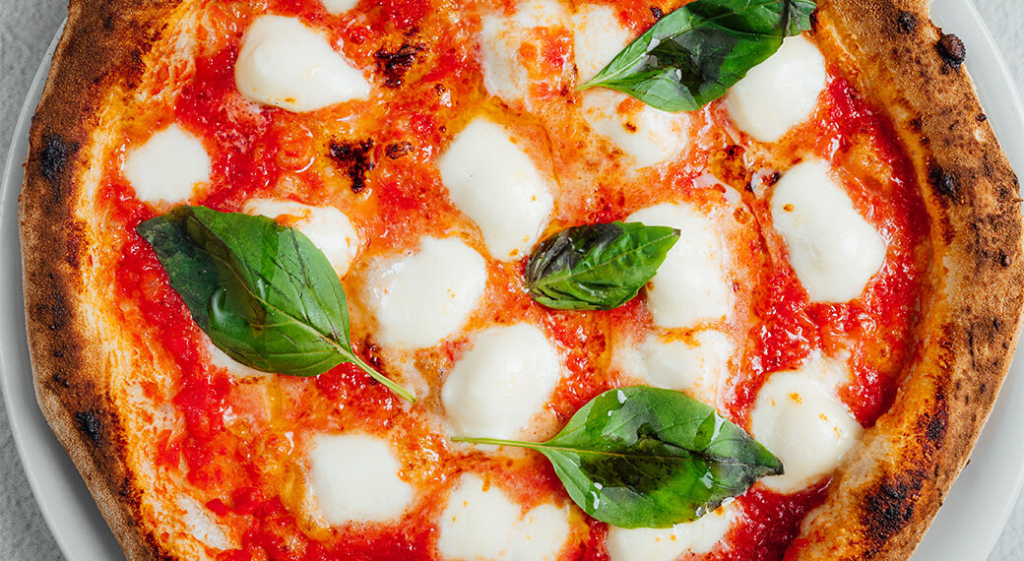

“Ideas are like pizza dough, made to be tossed around.” – Anna Quindlen. While classic pizza crust remains a masterpiece of simplicity, some chefs are mixing it up by forgoing normal flour for ancient grains. These varietals offer a chance to introduce a bread-course quality to your pizza program. We cover four great ideas for ancient grains that can bring a new crusty edge to your business: spelt, emmer, einkorn, and khorasan.
Conventional Commercial Flour
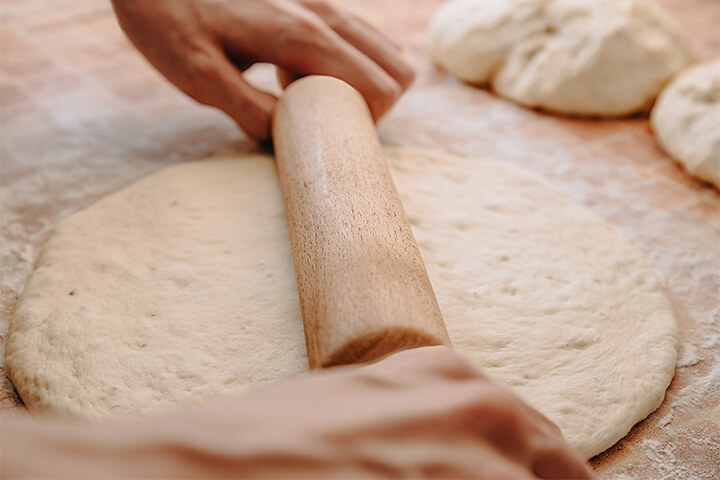
Commonplace commercial pizza flours are milled from modern, high-yield wheat varieties, and are standardized for consistency, high gluten content, and shelf-stability. While reliable, they often lack the complex flavor and nutritional benefits of their ancient counterparts. The milling process typically strips away the bran and germ, sacrificing essential oils, vitamins, minerals, and fiber, resulting in a product that performs predictably but offers a comparatively one-dimensional experience.
Ancient Grains
Ancient grains are grains and pseudocereals that have remained largely unchanged over thousands of years, meaning they have not been extensively bred or genetically modified in modern agriculture. In contrast, modern grains, like wheat and corn, have been extensively bred for higher yields, uniformity, and processing qualities, at the expense of genetic diversity and nutritional value.
Next, we explore four ancient grains that bring pizza crust to the next level.
Spelt
Spelt is an ancient, hulled species of wheat that was a staple food in parts of Europe from the Bronze Age through the Middle Ages, with origins dating back to the Neolithic period. Notably, it was the primary and most beloved cereal of the ancient Romans, predating the widespread use of common bread wheat. As a dough, spelt is versatile and works well in both traditional thin-crust and medium-thickness pizzas like New York or Roman styles.
Spelt imparts a distinct nutty, slightly sweet, earthy flavor and produces a light, fluffy, and tender crumb. To keep it at its best, spelt requires careful handling as overmixing will destroy the delicate gluten.
To promote spelt pizza, you could note its high protein and fiber count and easier digestion as health benefits.
Emmer
Also marketed as “farro” in the US and Italy, emmer has a history dating back over 10,000 years. This was the most common type of wheat grown and consumed in ancient Egypt and was a consistent part of Cleopatra’s diet. It is highly associated with European culinary traditions and excellent for use in thick-crust, Grandma, or Roman-style pizza al taglio.
Emmer as a dough produces a rustic, hearty texture and a chewier, robust crust. It is easy to handle and retains its shape well. Its high mineral count also accelerates fermentation. Chefs can bring out its tangy flavor further with sourdough applications.
Health-wise, emmer is an excellent source of fiber and protein, which results in a crust that is more filling and can help maintain stable blood sugar levels by slowing down digestion.
Einkorn
One of the oldest cultivated forms of wheat, Einkorn is often referred to as “nature’s original wheat.” Perhaps the most famous individual connected to einkorn is Ötzi the Iceman, a mummy found preserved in the Alps and dated to around 3300 BCE. His last meal included bread made from finely ground einkorn, confirming its status as a staple food even at that very early date.
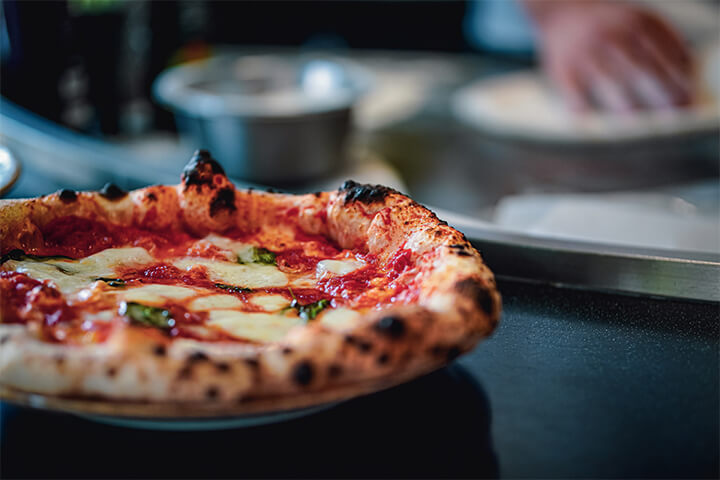
As a pizza dough, einkorn works best for Neapolitan-style or thin-crust pizzas because it produces a crust that is very tender and light. Einkorn brings a nutty, slightly sweet flavor with subtle butter notes. As a dough, it is less elastic and stickier than the normal variety. It has a delicate crumb, and requires less hydration and longer fermentation time to develop.
To market pizza made with einkorn, be sure to communicate its high digestibility, true ancient status, and its low quantity of gluten that it is tolerable for people with non-celiac wheat sensitivity.
Khorasan
Nutrient-dense khorasan (also called Kamut) originated in the Fertile Crescent and was a dietary staple in the early agricultural societies of the ancient Middle East. It is an excellent option for thick, deep-dish, or Sicilian-style crusts. It’s characterized by golden kernels, roughly twice the size of modern wheat. With a pronounced sweet, buttery, and honeyed flavor, Khorasan is also less astringent than standard whole wheat.
When working with khorasan flour, the dough is somewhat slack and prone to spreading, requiring careful tension-building during shaping. However, the dough is easy to hydrate and results in a final crust with a creamy mouthfeel due to its higher lipid content. It handles long, cold fermentation well, which helps in developing its complex flavor profile.
To market, Kamut is a trademarked name that ensures it is grown certified organic, non-GMO, and often without hybridization, so we recommend using that name with your customers.
In Crust We Trust
Next time you’d like to toss around some pizza ideas, don’t hesitate to go the ancient grain route. Spelt, khorasan, emmer, and einkorn grains are excellent marketing tools in terms of their ancient status, nutritional benefits, and digestibility. Tell their story and engage customers further with every bite.
