
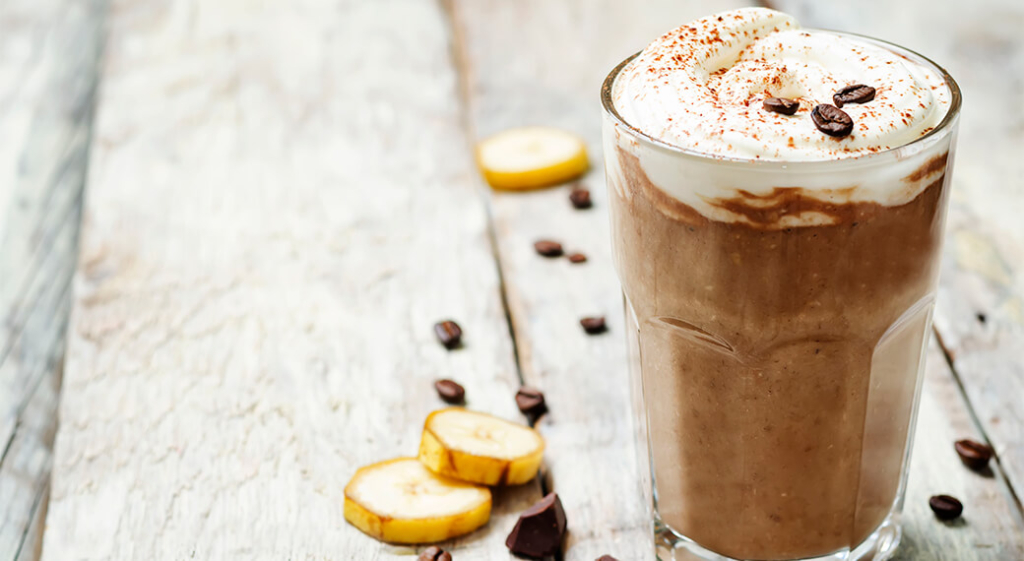

If you’re thinking of adding banana coffee to your menu or simply curious about the trend, this article is for you. We cover banana coffee’s international origins, K-pop connection, and four methods to consider when adding it to your beverage list.
Banana Coffee’s Global Path

While banana coffee may be new to the United States, people in East Africa and Southeast Asia have used the fruit’s natural sweetness in coffee for a very long time and for good reason: economics and availability as bananas were staple crops in these regions. The concept of banana coffee, however, remained largely localized and lacked a commercial profile until the early 21st century, when it ascended into a deliberate, marketable flavor profile.
Banana coffee gained traction in East Asian urban hot spots, driven by fourth-wave coffee shops that sought to differentiate themselves through unexpected flavor combinations and, of course, social media platforms. Seoul, South Korea, in particular, was the key incubator because of its highly competitive cafe scene and consumer base that is exceptionally receptive to new food and beverage experiences. The trend also magnified after Jungkook, from K-pop’s BTS, was spotted drinking banana milk.
After importing this trend from Seoul, foodservice businesses in US metropolitan areas began adapting its flavor profile as a calculated strategy. Afterall, as food, beverage, design, beauty, tech, auto, and fashion industry insiders know, so many US trends that are now staples, began in East Asia. In fact, present-day American consumers are increasingly drawn to bold, complex flavors and innovative food and beverage combinations, a trend that aligns perfectly with the culinary movements emerging from cities like Seoul, Tokyo, Singapore, and Taipei.
Like many of our newer trends, the demographic most drawn to banana coffee is Gen Z, who appreciates the perception of a natural, fruit-based sweetener to artificial syrups. Banana coffee also aligns with their demand for dairy-alternative beverages and appreciation for international culinary concepts.
Banana Flavor Techniques
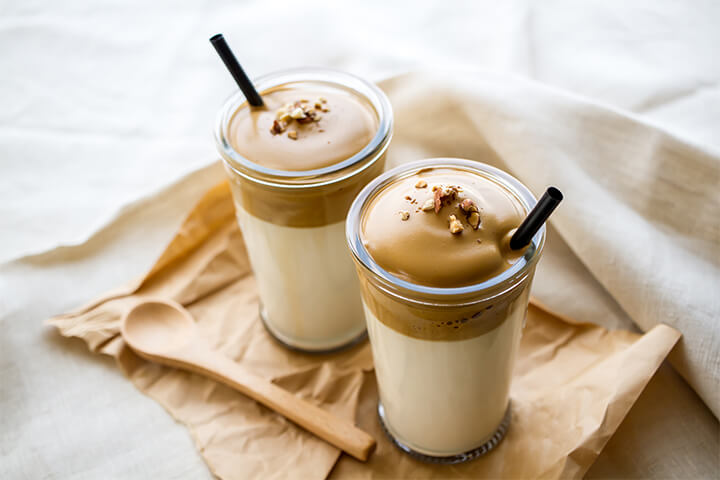
The distinct flavor of banana as a primary beverage component can be achieved through several methods: syrup, fresh puree, freeze-dried powder, and fermentation.
Banana Syrup
Banana syrup is currently the most common method used in commercial settings for its ease of use and shelf stability. Ideally, the syrup is house-made from real bananas or if not, sourced from a high-quality producer to avoid artificial notes. While the resulting flavor is sweet and distinct, it often lacks the complex, earthy notes of a fresh banana. Texture-wise, it is smooth and integrates easily into coffee which is convenient for cold beverages, such as iced lattes, cold brew, and blended drinks, where quick, even dispersion is necessary. Using a simple syrup also creates a slightly thicker mouthfeel than your standard latte.
Café operators who prefer using syrup have noted it is easy to portion, easy to produce consistent results, requires minimal prep if sourced from a producer, and has a long shelf life.
Fresh Banana Puree
Fresh puree is the healthiest, freshest technique, albeit more labor-intensive. When using a puree or blended whole banana, the texture becomes creamy, smooth, and substantial, like a milkshake. Operators can have it made in-house daily or prepared in batches for short-term use. Naturally, fresh whole banana puree requires daily or near-daily prep and proper storage to prevent oxidation and browning. Additionally, like the once trending banana “ice cream,” select nearly overripe bananas for more sweetness and a softer texture.
When added to coffee, fresh puree delivers a true banana taste with subtle, earthy undertones. The flavor can be less concentrated than syrup, but it is more authentic and complex. One thing to watch out for is that even when the bananas are finely puréed, minute particulates may still be present, making it less suitable for clear drinks that require a smooth mouthfeel.
The fresh fruit appeals to customers seeking a natural, wholesome, nourishing, and less-processed product. Operators have received some pushback when pulp is present, while others prefer it as a point of distinction, so clearly communicate pulp levels on your menu to avoid a polarizing customer experience.
Freeze-Dried Banana Powder
This is a powder made from ripe bananas that have been frozen and then had their water content removed through sublimation. Freeze drying preserves the banana’s natural flavor and nutritional content without the use of additives, so it is very appealing to health conscious customers. For operators, freeze-dried powder provides banana flavor without adding significant moisture or texture. The flavor is clean and distinct, with a natural sweetness, because the powder acts as a concentrated version of the fruit itself.
Texture-wise, this shelf-stable powder has a talc-like consistency. However, when mixed into liquids, especially cold ones, it has a tendency to rehydrate unevenly. Avoid a gritty texture and achieve a fully smooth beverage by using a high-performance commercial blender. It’s best to use freeze-dried banana powder in coffee drinks where a thicker, blended consistency is desirable like caffeinated smoothies. However, it is not ideal for standard espresso drinks due to its solubility challenges.
For proper storage, operators should place powder in a cool, dry, airtight container to prevent clumping. While shelf-stable, it is relatively more expensive than other methods.
Fermented Banana
This niche, high-end technique used by innovation-forward cafes and restaurants, is a treat for adventurous palates. Operators typically use a banana vinegar or a naturally fermented banana liquid, resulting in a highly complex and acidic flavor profile, with notes ranging from sour funk to deeply fruity. Fermentation also reduces sweetness and replaces it with a tangy or umami-like character. Fermented banana texture is typically a smooth liquid and best used sparingly as a flavor enhancer, much like a citrus peel or bitters. We do not recommend this culinary-driven application for use in standard lattes. Sophisticated, experience-seeking customers are intrigued by novelty and complexity, but it is not for a general audience at this point in time.
For operators, it requires significant in-house production with a fermentation expert, or sourced from a specialty producer. Compared to the other three techniques, fermentation is the least scalable, but perhaps the most memorable.
Banana Coffee Flavor Pairings
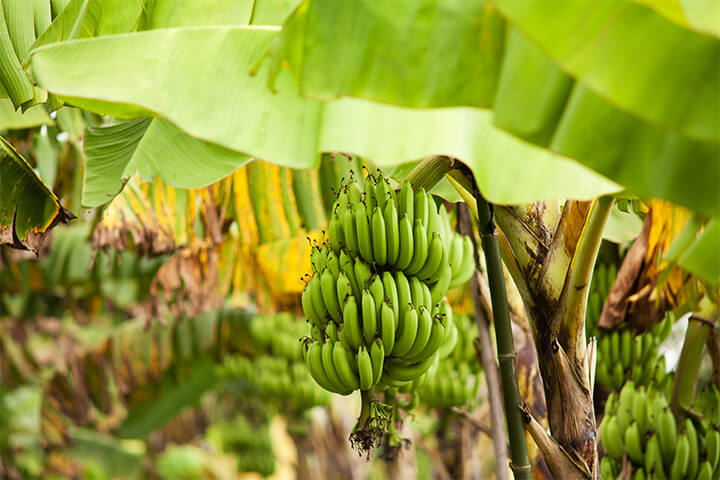
Culinary creatives, take note — applications and flavor pairings for banana coffee are plentiful, which opens a wealth of options for new menu items.
A popular option is the banana cream cold brew, where a cold brew coffee is topped with a banana-infused cold foam. Another is the banana affogato, where a scoop of banana ice cream is submerged in a shot of espresso. A high-quality dark chocolate or cocoa powder is a classic pairing that creates a mocha-like profile. Spices like cinnamon, nutmeg, and cardamom complement the fruit’s warmth for beverages like the fan-favorite, banana bread latte. For a more tropical theme, adding coconut milk creates a beverage that whisks customers away to sun and sand.
A Flavor Profile with Staying Power
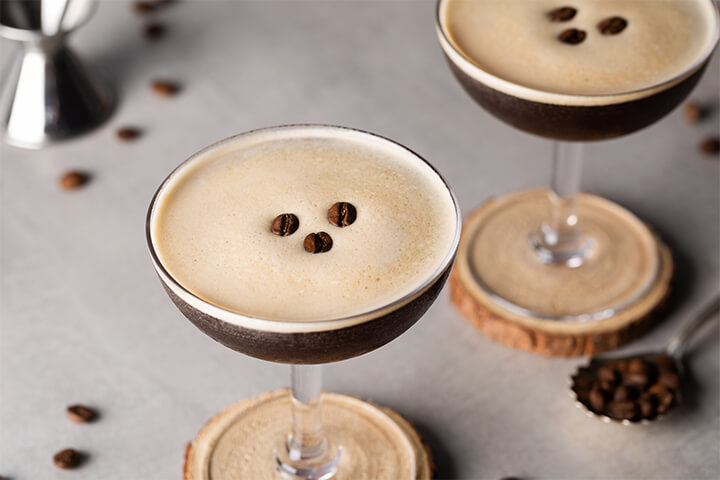
The growing popularity of banana coffee highlights a shift in consumer preferences toward natural, innovative, and internationally-inspired flavors. With a wide range of flavor pairings and variations, banana coffee offers a versatile platform as a trend with staying power for both traditional and distinctive coffee shops and restaurants.
