

Advances in biotechnology have opened new ways to produce food. Cultivated meat, 3D-printed meat, and precision fermentation each take a different approach and each is at a different stage of development. We explain the similarities and differences between the three as well as their growth within the foodservice industry.
Cultivated Meat

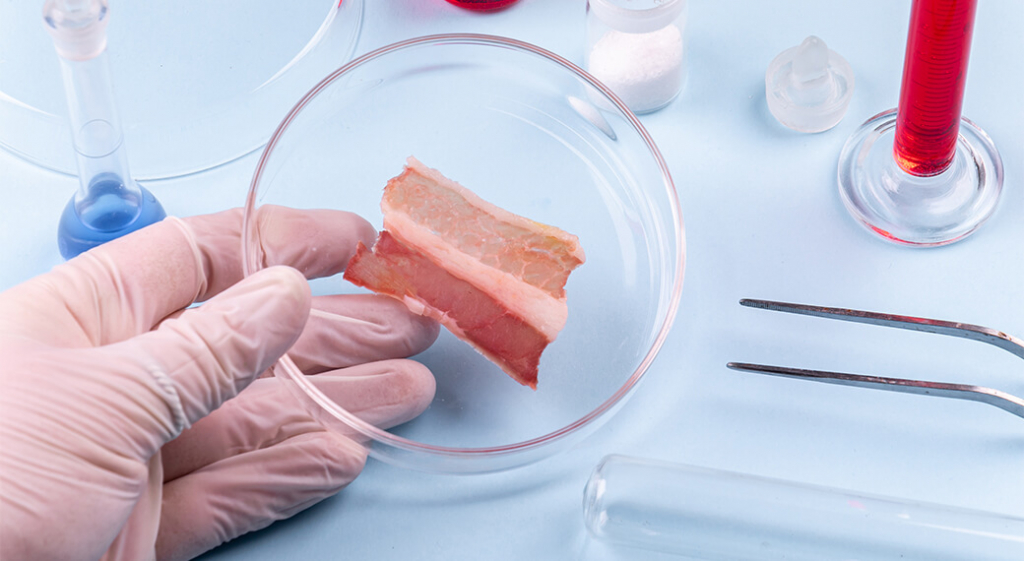
Cultivated meat is grown in labs and is biologically identical to “real” meat and seafood. Scientists take stem cells from a living animal and place them into bioreactors where the cells multiply with help from a nutrient-dense broth of amino acids, vitamins, minerals, and sugars.
Companies generally limit their cells to those of chicken, beef, pork, and salmon, while others offer specialty products like lab-grown foie gras. Traditional foie gras is made by force-feeding ducks and geese using metal tubes until their livers have enlarged 10x their normal size. Its production is facing growing restrictions, import bans, and public pushback.
Innovative companies like Vow introduced their lab-grown version, which addresses the ethical and legal dilemmas foie gras fans face.
Cultivated meat also aids in maritime sustainability. For instance, traditional unagi farming relies on capturing wild eel larvae, which are critically endangered and heavily overfished. Companies like Shiok Meats and other marine cell-ag developers have targeted cultivated eel meat to provide a sustainable alternative for high-end sushi markets without depleting wild populations.
Cultivated products are still limited within the public retail space, though occasionally opportunities pop up. For instance, Huber’s Butchery in Singapore (a country leading in cultivated meat production) partnered with GOOD Meat to offer cultivated chicken.
3D-Printed Meat
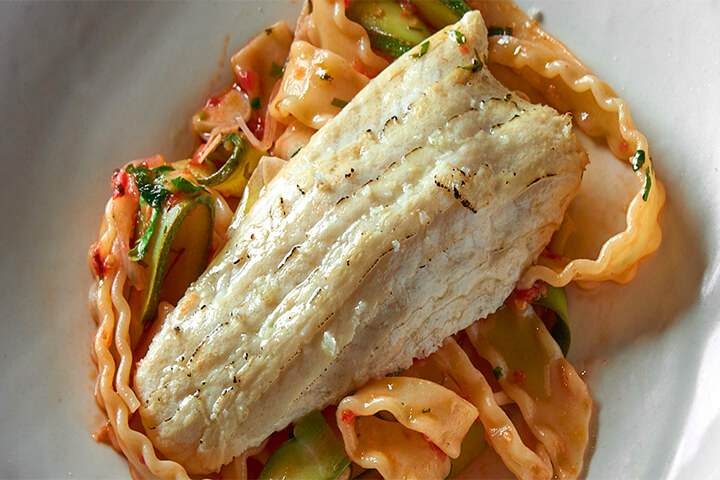
While cultivated meat is still finding its retail footing, 3D-printed steaks and seafood that look, feel, and taste like the real thing are available in the grocery freezer aisle. The twist? They are 100% plant-based.
Producers use 3D printing technology to create realistic fake meat by layering plant proteins like soy, wheat, or pea. Their textures are very realistic; however, they do not contain any animal cells.
Industrial food 3D printers use nozzles filled with edible ink:
- Muscle Matrix Ink: Formulated from pea, soy, or wheat protein to replicate muscle fibers.
- Fat Ink: Made from natural plant oils to replicate marbling.
- Blood / Moisture Ink: Formulated with natural colorings (like beet extract) and leghemoglobin to provide juiciness.
The printer deposits these materials layer by layer in precise geometric patterns. By controlling where the fat ink meets the muscle fiber ink, the machine produces a whole-cut item with authentic-feeling grain, marbling, and chew.
3D-printed meat is also used in the cultivated meat space, though these products are not commercially available yet. Single cells naturally grow in thin layers. To form thick, structured cuts for replicating ribeye or pork belly, bioprinters deposit living cells directly into plant-based or synthetic scaffolding matrices to guide cells into organized muscle fibers as they mature.
Precision Fermentation
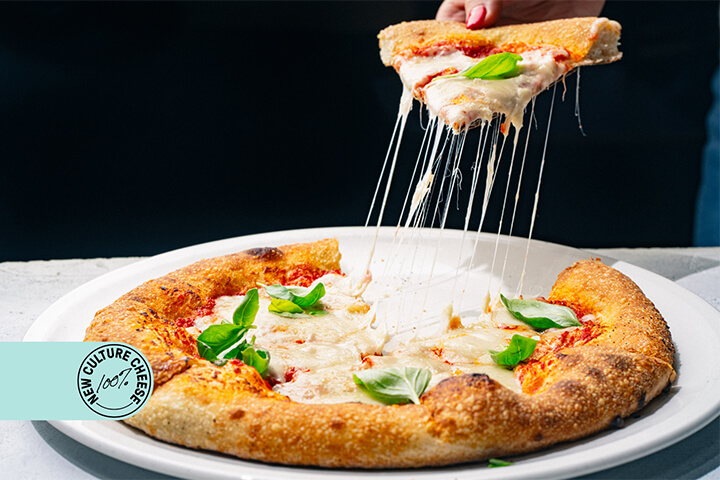
Precision fermentation is a commercially successful branch of modern biotechnology. It uses micro-organisms, like yeast, fungi, algae, or bacteria, to brew bio-identical animal molecules.
Scientists genetically program microorganisms to produce specific proteins to replicate specific products: animal-free milk, cheese, ice cream, and egg white replacements. After fermenting in tanks, the texture and functional properties are a perfect match.
Precision fermentation used for food production has been around since the early 1990s when biopharmaceutical giant Pfizer received regulatory approval to create rennet used in hard cheese. Their rennet was made from precision-fermented yeast, as opposed to the traditional method of sourcing rennet from the stomach lining of slaughtered calves.
Eventually, businesses realized the technology could produce major structural animal proteins. Firms like Temasek, Horizon Ventures, Khosla Ventures, and celebrities like Leonardo DiCaprio have poured billions into early-stage precision fermentation startups.
Growing cultivated meat requires animal cells that multiply slowly and require expensive, pristine growth factors. Yeast and bacteria, by contrast, multiply exponentially within hours, feed on simple plant sugars, and have been grown in massive industrial vats for over a century.
Because of this, precision fermentation has already scaled into a billion-dollar global ingredient sector, while cultivated meat remains bound to luxury dining and specialty occasions.
The Future of Protein Is Still Cooking
These technologies are still developing, and their place in the foodservice supply chain will be decided by consumers and the industry over time. For now, they give shoppers and chefs three distinct options to evaluate for themselves.
