
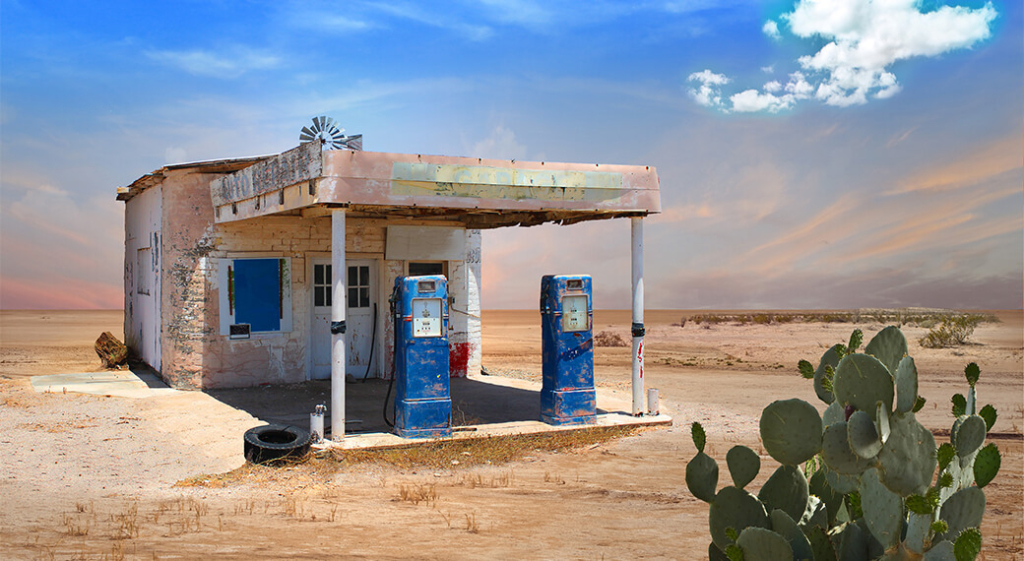

If you’re scouting locations for your next restaurant, are vacant gas stations on your shortlist? These sites come with built-in advantages that would cost a fortune to replicate from scratch. We cover what gas station adaptive reuse offers and where the real costs are hiding.
The Built-In Benefits of Converting Old Gas Stations
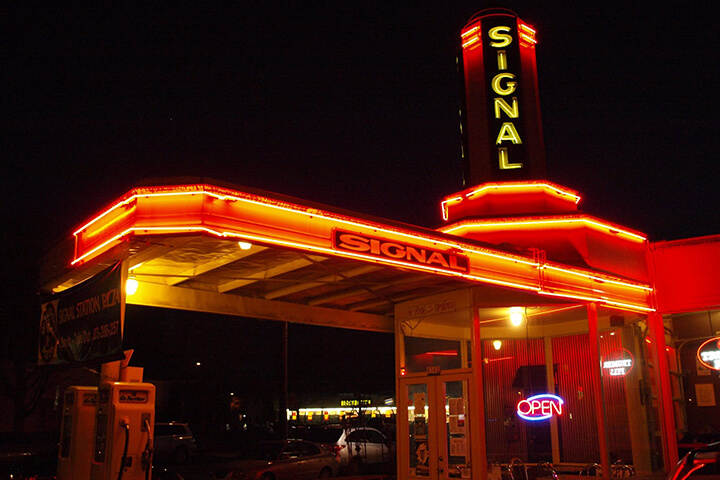
Adaptive reuse is the architectural practice of repurposing an existing building for a use other than its original design, such as converting an old factory into a boutique hotel. Repurposing buildings preserves historical structures, reduces the environmental impact of new construction, and contributes to revitalizing urban areas.
Even though gas stations weren’t built with restaurants in mind, their original design choices are paying off for the operators who take them on. Here’s what makes these sites worth a second look.
Location
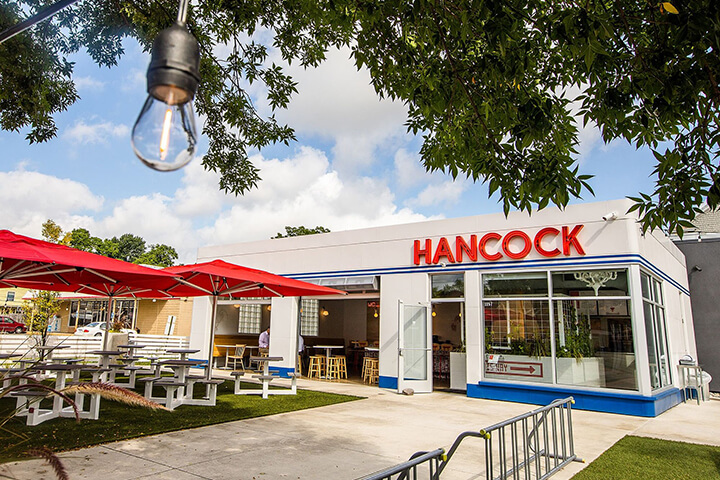
Gas stations were almost exclusively built on prominent corner lots to maximize visibility from multiple directions. For a restaurant, this provides dual-street exposure, meaning twice the signage opportunities and double the frontage compared to mid-block retail spaces.
Many gas stations were built at high-volume intersections or along major arterial roads designed to funnel traffic in and out of residential neighborhoods. This positions the restaurant directly in the daily path of commuters, making it highly convenient for after-work dinners, morning coffee runs, or quick takeout pickups.
Canopy Structures & Overhead Garage Doors
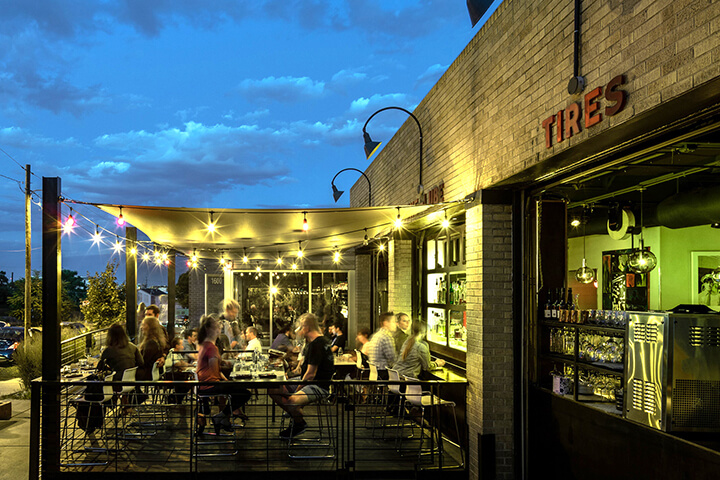
The fuel canopy is a welcome asset on these sites. Structurally, they’re built to withstand weather and support their own load without interior columns. Should operators choose to keep it, the space underneath is flexible for patio seating, bar service, or a secondary point-of-sale window.
When the weather is pleasant, rolling up the doors immediately merges the indoor dining room with patio seating. This visual openness is highly effective for attracting foot traffic and making the space look vibrant and inviting from the street.
Flexible Kitchen Configurations
Service bays were designed with wide clear spans, minimal interior structural walls, and often already have reinforced concrete flooring rated for heavy equipment. That translates surprisingly well into commercial kitchen layouts, especially exhibition-style kitchens where the cooking is part of the guest experience. The absence of load-bearing interior walls also gives designers more freedom to reconfigure the back-of-house without expensive structural work.
Sustainability
Demolition and new construction carry significant embodied carbon costs tied to materials manufacturing, transport, and the demolition waste stream itself, all of which reuse largely avoids. That’s material for press coverage, for sustainability-minded guests, and increasingly for landlords and municipalities offering incentives tied to adaptive reuse specifically.
Drawbacks
The real work of a gas station conversion happens beneath the concrete. Before anyone can fire up a stove, there’s an environmental and mechanical obstacle course to clear.
Environmental Cleanup
Before you can get moving, lenders and insurers typically require a Phase I Environmental Site Assessment before financing or underwriting a conversion.
If underground storage tanks are still in the ground, they generally have to be removed, tested for leaks, and the surrounding soil assessed before construction can move forward. Costs vary widely depending on the number of tanks, their age, and whether contamination is found.
Sites with clean tank closures cost far less than sites where soil or groundwater remediation is required, so it’s worth getting a Phase I assessment early to understand which scenario you’re dealing with. Older or unregistered tanks can also surface unexpectedly during excavation, which is why a thorough site history matters before closing on a property.
Mechanical and Code Upgrades

Since gas stations were designed as kiosks and service bays, as opposed to commercial kitchens, most systems have to be added from scratch: grease traps, commercial ventilation hoods, upgraded electrical service, and plumbing sized for a working kitchen. Likewise, fire suppression systems for cooking equipment and ADA compliance are other features that most gas station sites don’t already have.
Help Is Available
Often, cleanup costs aren’t the operator’s problem alone. Many states offer incentive programs to clean up these properties, like Colorado’s program reimbursing owners a dollar per gallon of tank capacity removed.
The Value of Existing Infrastructure

Gas station adaptive reuse conversions can be a smart trade: operators take on upfront environmental and mechanical costs in exchange for a site with visibility, layout flexibility, and infrastructure. The sites that work out the best are usually the ones where a Phase I assessment happens early, before a lease or purchase is finalized, so the real scope of cleanup is known going in. With that groundwork done and the right state incentives in play, a former gas station can become one of the more distinctive, cost-effective builds in an operator’s portfolio.
